
Introduction: From Pawn To Powerhouse
From Pawn To Powerhouse: Mastering Chess Strategy is all about turning simple pawn moves into powerful, game-winning plans. Chess is not only about knowing how pieces move; it is about using them with purpose. When players learn clear, practical strategy, even an ordinary “pawan” (pawn) can become the hero of the board.
This guide breaks down essential ideas so beginners and casual players can think ahead with confidence, avoid common traps, and slowly transform their play from random moves to purposeful strategy.
H1: What Does Chess Strategy Really Mean?
Chess strategy is the long-term plan behind your moves, not just quick tricks or one-move threats. It focuses on improving piece activity, keeping the king safe, and building a strong pawn structure that supports your ideas over many moves.
Tactics like forks, pins, and skewers help you win material immediately, but strategy decides why you put your pieces on certain squares in the first place. When players combine sound strategy with basic tactics, their overall game improves dramatically.
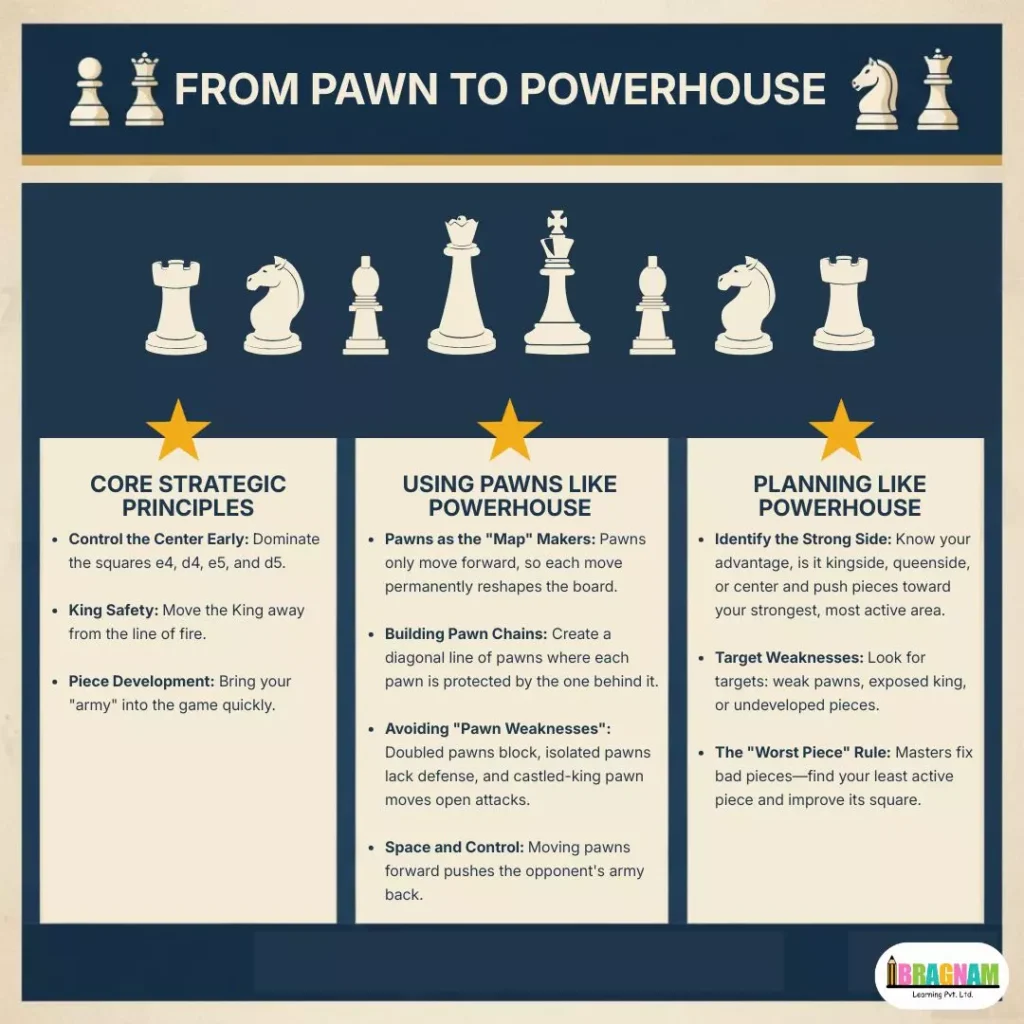
H2: From Pawn To Power – Core Strategic Principles
H3: Control the Center Early
- The central squares (e4, d4, e5, d5) give your pieces maximum influence and flexibility.
- Use pawns and knights to fight for the center instead of moving random edge pawns or chasing early attacks.
- Central control makes every piece stronger, giving you more room to attack and defend while restricting your opponent’s options.
H3: Keep Your King Safe
- Castle early so your king leaves the center and your rook joins the game.
- Avoid weakening the pawns in front of your castled king unless there is a clear reason.
- A safe king means you can focus on building pressure instead of constantly parrying threats and cheap checkmates.
H3: Develop Pieces, Not Just Pawns
- Bring knights and bishops out quickly; avoid moving the same piece again and again in the opening.
- Each piece should move toward an active square where it controls important lines or supports a future plan.
- Good development is like assembling a team: once all your pieces are active, they can coordinate for strong attacks or rock-solid defense.
H2: Using Pawns Like a Powerhouse
Pawns shape the “map” of the game. Their structure decides where you are strong, where you are weak, and which side of the board you should play on.
- Avoid unnecessary pawn moves, especially near your king, because every pawn move creates new squares to defend.
- Use pawn chains (connected pawns supporting each other diagonally) to claim space and guide your pieces.
- A healthy pawn structure is often more valuable than a flashy one-move trick because it gives lasting advantages that are hard for your opponent to undo.
H2: Simple Chess Tactics Every “Pawan” Should Know
Strategy tells you where to play; tactics show you how to win material or finish an attack. Learning a few basic patterns can instantly turn ordinary positions into winning ones.
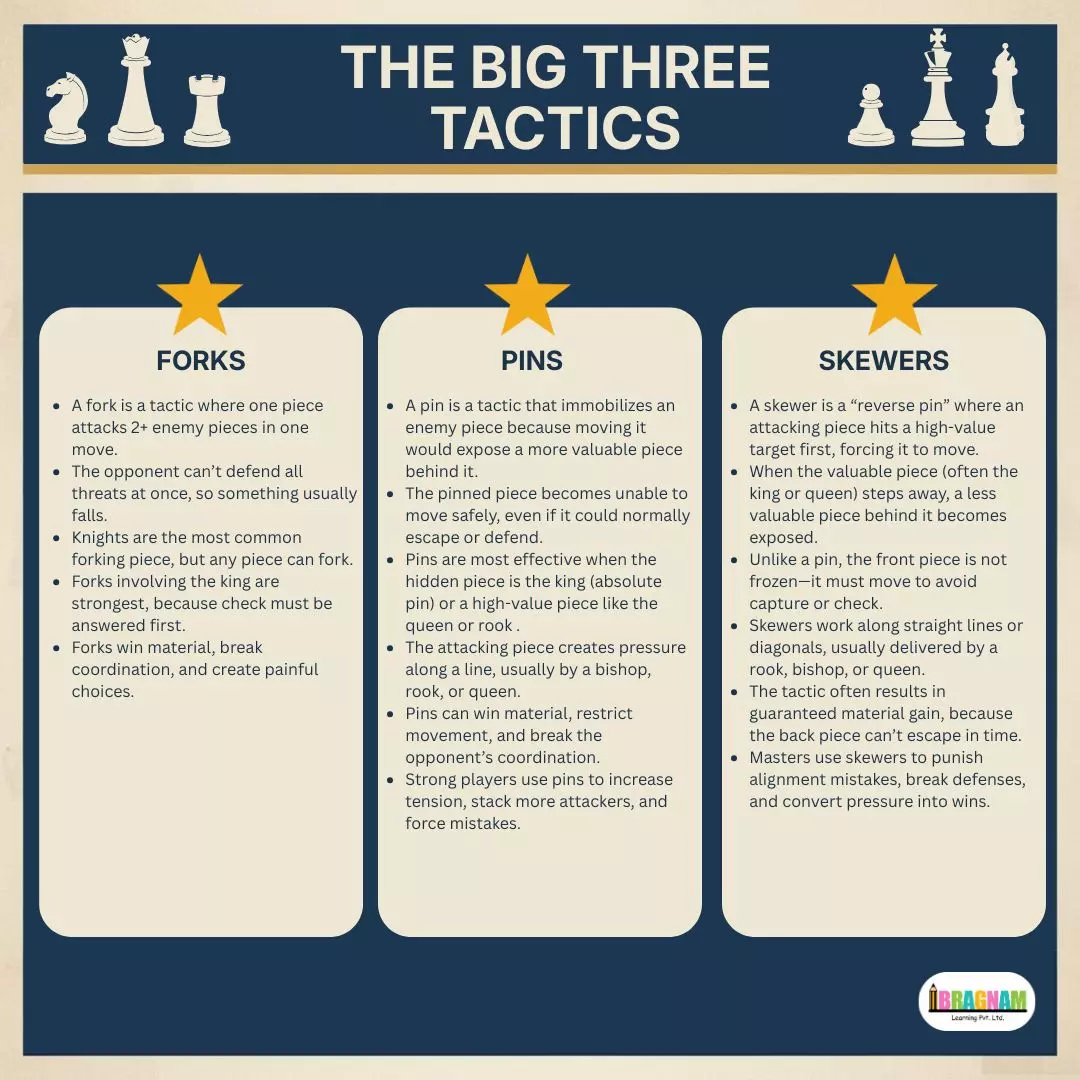
H3: Forks
A fork happens when one piece attacks two or more enemy pieces at the same time. Knights, queens, and even pawns can create forks that force your opponent to lose material.
H3: Pins
A pin freezes a piece in place because moving it would expose something more valuable, often the king or queen. Bishops, rooks, and queens are excellent at creating pins along files, ranks, and diagonals.
H3: Skewers
In a skewer, a more valuable piece stands in front of a less valuable one on the same line. When the front piece moves away from attack, the back piece is left hanging and can be captured.
By keeping pieces active in the center and on open lines, players naturally create more chances for forks, pins, and skewers.
H2: Planning Like a Powerhouse
Many beginners “just move something” each turn; stronger players always try to play with a plan. After the opening, pause and ask a few simple questions.
- Which side of the board is stronger for my pieces: kingside, queenside, or center?
- What are my opponent’s weaknesses (weak pawns, exposed king, undeveloped pieces)?
- Which piece of mine is the worst placed, and how can I improve it?
Even a “small” plan—such as doubling rooks on an open file or targeting one weak pawn—can turn a passive position into a powerful one over time.
H2: Practical Ways To Improve Your Strategy
Turning From Pawan To Powerhouse: Mastering Chess Strategy into reality needs consistent, focused practice, not just reading.
- Play slower time controls (like 15+10) so there is time to think, not just react.
- Review your games and ask where your plan went wrong or where you missed a better strategic idea.
- Study one concept at a time (e.g., centralization this week, pawn structure next week) and apply it in your games.
This kind of deliberate practice helps players steadily build real understanding, not just memorized moves.
FAQ: From Pawn To Powerhouse – Mastering Chess Strategy
Q1. What is the difference between chess strategy and tactics?
Strategy is the long-term plan that guides your moves, focusing on piece activity, king safety, and pawn structure. Tactics are short-term combinations like forks, pins, and skewers that win material or deliver checkmate.
Q2. How can a beginner start mastering chess strategy?
Beginners should first learn to control the center, develop pieces quickly, and castle early. Then they can slowly study pawn structures and basic planning, one concept at a time.
Q3. Are pawns really that important in strategy?
Yes, pawns decide where the battles happen and which squares are weak or strong. Strong pawn formations support attacks and defense, while weak ones become long-term targets.
Q4. How often should players practice tactics like forks, pins, and skewers?
Regular daily practice of even a few puzzles helps players spot tactical patterns more quickly in real games. Consistency is more important than long, rare study sessions.
Q5. What time control is best for learning strategy?
Slower games, such as 15+10 or 30-minute rapid, give enough time to think about plans instead of playing only on instinct. After each game, reviewing critical moments deepens strategic understanding.
Conclusion: Your Journey From Pawan To Powerhouse
From Pawn To Powerhouse: Mastering Chess Strategy is not about memorizing hundreds of openings; it is about understanding a few timeless principles and using them in every game. When you control the center, protect your king, build a solid pawn structure, and combine that with simple tactics, your results and confidence will naturally grow.
Take the next step today: choose one idea from this article—like central control or king safety—and apply it in your very next game. Over time, each small, consistent improvement will turn your simple pawns and pieces into a true powerhouse on the chessboard.