
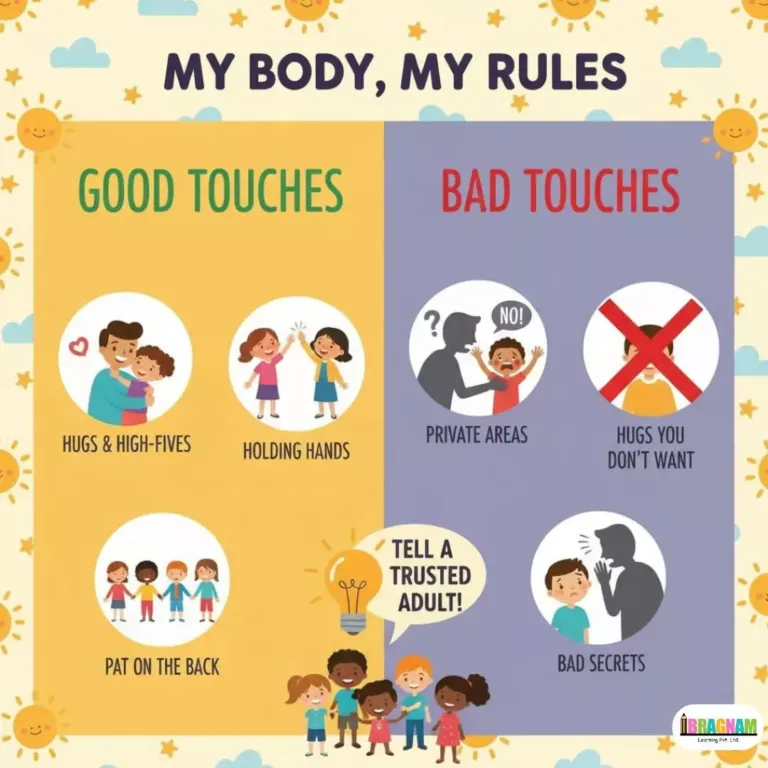
Teaching young children about good touch and bad touch is essential for their safety, well-being, and personal boundaries. Kindergarten is an ideal time to introduce this concept in a simple, clear, and sensitive way that empowers children and builds their confidence. This guide explains how to talk about good and bad touches with kindergarteners, why it matters, and practical tips for parents and teachers.
What Are Good Touch and Bad Touch?
At its core, the difference between Good touch and Bad touch is how a touch makes a child feel:
- Good Touch: Touch that make the child feel safe, happy, cared for, and comfortable. Examples include hugs from parents, high-fives, handshakes, or a pat on the back. Good touches show love, care, and protection.
- Bad Touch: Touch that make the child feel scared, uncomfortable, anxious, or unsafe. These might be touches to private parts, unwanted hugs or kisses, or any touch that causes hurt physically or emotionally.
Teaching children to recognize these helps them understand their personal boundaries and know when to say “No” or seek help from a trusted adult.
Why Is This Important in Kindergarten?
Kindergarteners are at an early but critical stage of developing body awareness and social skills. Introducing the concept early:
- Builds awareness of body autonomy and privacy
- Prevents abuse by empowering children to speak up
- Encourages safe, respectful interactions with peers and adults
- Helps children understand consent in simple, age-appropriate terms
How to Teach Good Touch and Bad Touch to Kindergarteners
Use Simple, Clear Language
Avoid complex words and be direct. For example:
- “Good touches are ones that make you feel happy and safe.”
- “Bad touches are touches that make you feel scared, wrong, or uncomfortable.”
Use Everyday Opportunities
Integrate learning in daily routines:
- When helping with hygiene, explain why certain touches (like washing hands) are good touches.
- Use storybooks and role-plays about personal space and body safety.
Role-Playing and Scenarios
Practice real-life situations:
- Ask the child what they would do if an unwanted touch happens.
- Teach phrases like “No,” “Stop,” or “I don’t like that.”
Encourage Open Communication
Let children know:
- They can always talk to you about anything uncomfortable.
- There are no bad secrets; trusted adults are there to help.
Explain Private Parts and Body Rules
Help children learn the names of body parts and that private parts are not to be touched by anyone except for health or safety reasons (like a doctor or parent helping with bathing).
Reinforce Saying No and Reporting
Make children confident that they can say “No” and tell a trusted adult without fear or shame.
Examples of Good Touch and Bad Touch
| Good Touch | Bad Touch |
| Hugs from parents or teachers | Touching private body parts |
| High-fives and handshakes | Any touch that hurts or scares |
| Pat on the back or shoulder | Forcing a kiss or hug |
| Help from a doctor or parent | Touches that are secrets or threats |
Signs a Child May Receive Bad Touch
- Avoids certain people or places
- Exhibits fear or anxiety around certain adults
- Regression in behavior (bedwetting, clinginess)
- Reluctance to be touched or hugged
FAQs About Good Touch and Bad Touch for Kindergarten
Q1: How early should I talk to my child about good touch and bad touch?
A1: Start as early as preschool or kindergarten age using simple and age-appropriate language to build awareness.
Q2: What if my child is scared or confused talking about bad touches?
A2: Use a gentle and positive approach, reassure them, and emphasize safety and trust so they feel supported.
Q3: How can teachers help with this topic?
A3: Teachers can create a safe environment, use stories, role-plays, and open discussions to teach kids about boundaries and personal space.
Q4: How do I explain private body parts to my child?
A4: Use correct names in simple terms and explain that private parts are special and shouldn’t be touched except for health or safety.
Q5: What should I do if my child tells me about a bad touch experience?
A5: Stay calm, listen carefully, reassure them, and seek professional help or authorities if needed.
Conclusion
Understanding good touch and bad touch is a vital life skill for kindergarten children. Teaching them early with age-appropriate language and methods protects their body safety, builds confidence, and empowers them to speak out. Through open communication, practical examples, and repeated reinforcement, parents and teachers can help children maintain healthy personal boundaries and stay safe.