


Starting something new — a school year, a move, or even a fresh classroom routine — can be both exciting and a little scary for young children. As adults, we understand that change brings opportunities, but for children, new beginnings often come with questions and uncertainty. As educators and parents, our role is to gently guide them toward positivity, curiosity, and confidence as they step into new experiences.
Understanding Why New Beginnings Can Feel Overwhelming
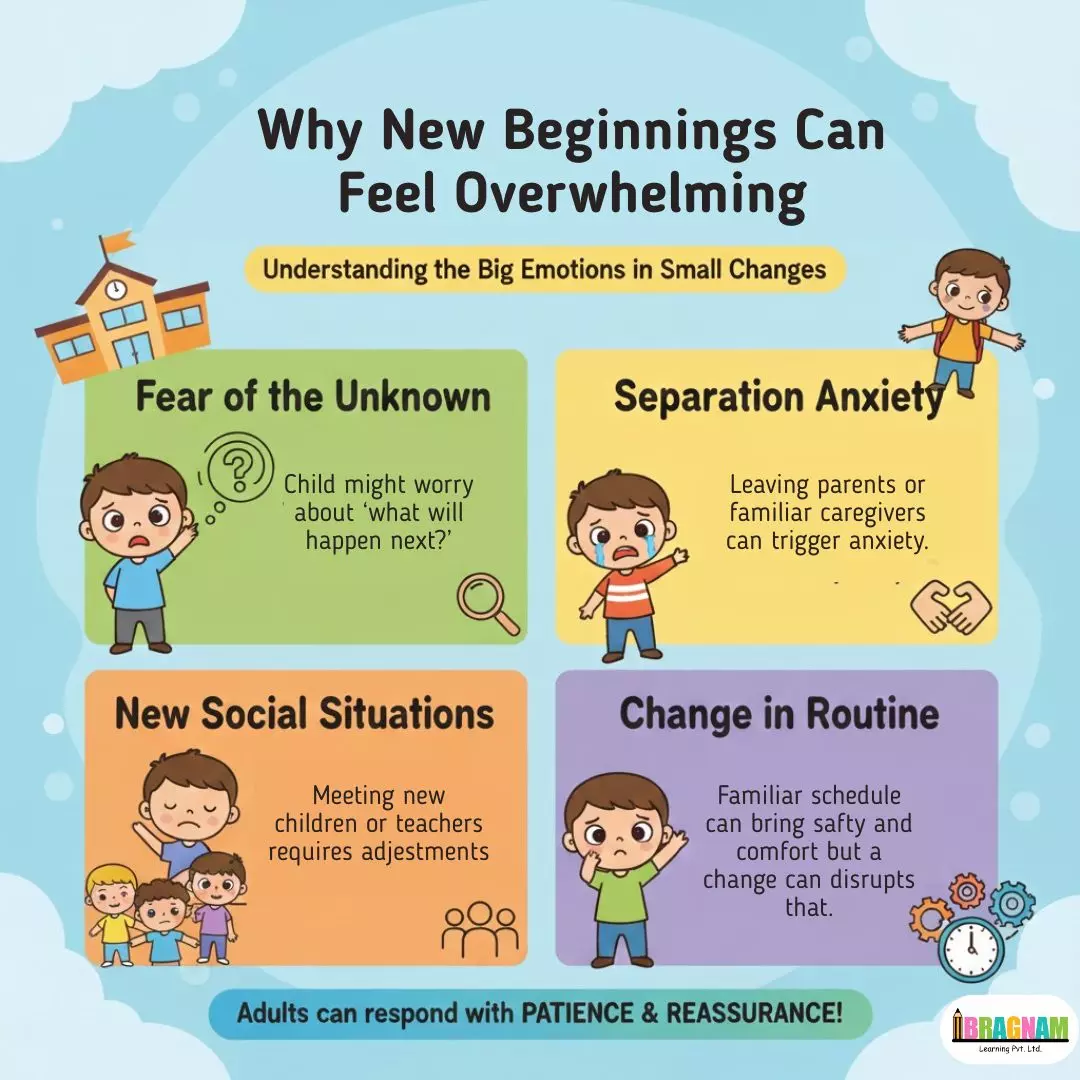
For a young child, even small changes — such as a new classroom or teacher — can feel big. Children thrive on routine and predictability, so when things shift, they may become anxious or withdrawn. That’s completely natural.
Here’s why new beginnings can be challenging:
- Fear of the unknown: Children might worry about what will happen next.
- Separation anxiety: Leaving parents or familiar caregivers can trigger nervousness.
- New social situations: Meeting new friends or teachers requires adjustment.
- Change in routine: Familiar schedules bring comfort, and change disrupts that safety.
Understanding these emotions helps adults respond with patience and reassurance.
How to Talk to Young Children About New Beginnings
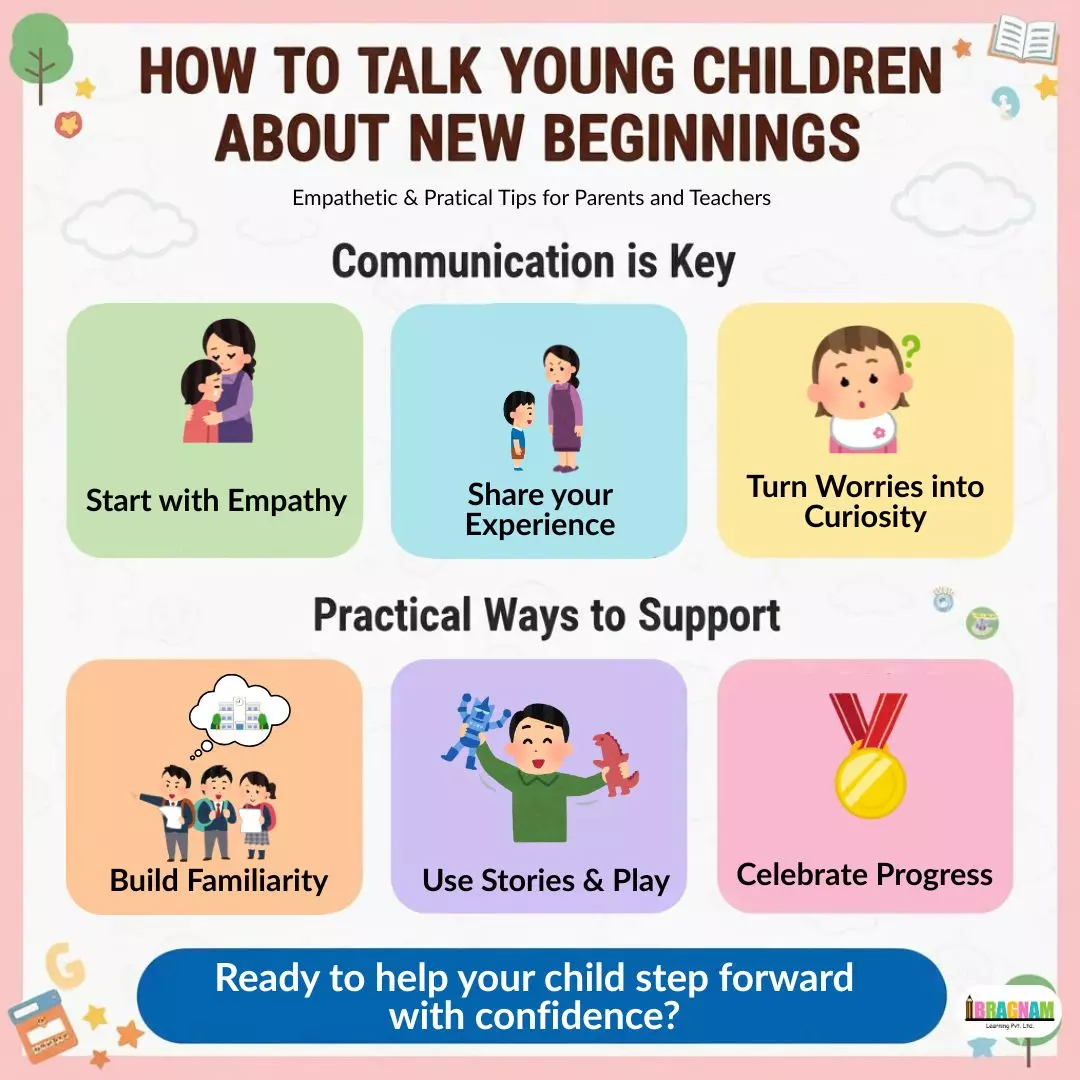
Communication is key, and young children thrive when adults talk to them with gentleness and clarity. Use moments of calm to explore their thoughts and feelings about new experiences.
1. Start with empathy
Begin by acknowledging their feelings. You can say things like:
- “It’s okay to feel a little nervous about your new school.”
- “Starting something new can be exciting and a bit scary at first.”
This reassures children that what they feel is normal.
2. Share your own experiences
Tell them about a time when you started something new — maybe your first day at a new job or when you moved to a new place — and how it turned out well in the end. This helps them see that change is universal and manageable.
3. Keep explanations simple
Avoid overwhelming details. For example:
- Instead of: “You’ll meet so many new children and learn dozens of fun activities!”
- Try: “You’ll meet new friends, play games, and sing songs together.”
Simple language makes transitions easier to understand.
4. Turn worries into curiosity
Encourage children to explore what they’re excited about:
- “What do you think your new classroom will look like?”
- “What games do you want to play with your new friends?”
This helps reframe anxiety into anticipation.
5. Create comforting rituals
Routines provide stability. A special song, goodbye hug, or “morning mantra” can reduce separation anxiety before school each day.
Practical Ways to Support Young Children During Change
Build familiarity before the change
- Visit the new school or classroom together.
- Meet teachers or caregivers beforehand.
- Read books about first days and new experiences.
Use stories and play
Role-playing new situations (like pretending to pack for school or greeting a teacher) can help children process what’s coming in a playful, safe way.
Encourage small steps
Praise every effort: walking into the classroom bravely, saying hello to a new friend, or participating in a new activity.
Celebrate progress
Mark each milestone, however small — “You were so brave today!” or “You met a new friend!” Positive reinforcement builds emotional resilience.
The Role of Teachers and Caregivers
Teachers play a critical role in easing transitions. They can:
- Create a welcoming classroom atmosphere with familiar routines.
- Display children’s artwork or names on cubbies to build ownership.
- Use calm tones and smiles to communicate safety.
- Encourage peer bonding through group play or circle time sharing.
Parents and educators working together ensure consistency between home and school, making new beginnings smoother for the child.
How Parents Can Model Positivity About Change
Children watch how adults handle change. If you express excitement about new beginnings, your child is more likely to feel the same. Try:
- Discussing new opportunities (“You’ll make new friends!”)
- Showing calmness on the first day instead of anxiety
- Sharing uplifting stories about your own experiences with change
Encouraging Independence and Confidence
Building independence helps children face new beginnings more confidently. You can:
- Let them choose their backpack, lunchbox, or outfit.
- Encourage them to handle small tasks like packing their school bag.
- Celebrate their efforts, not just their outcomes.
When to Seek Extra Support
If your child experiences ongoing distress, frequent crying, or sleep issues related to the new routine, it might be time to talk to teachers or a child counselor. Often, gentle reinforcement and consistent care are enough, but professional input can help if anxiety persists.
Conclusion
New beginnings are part of every child’s growth journey. Whether it’s starting kindergarten, moving classrooms, or adjusting to change, how we talk to children shapes how they respond. By combining empathy, positivity, and consistency, parents and educators can turn uncertainty into excitement — helping every young learner step forward with confidence.
So, as your child prepares for their new adventure, remind them — every beginning holds the promise of something wonderful!
Frequently Asked Questions (FAQs)
1. How do I calm my child before the first day of school?
Practice the morning routine a few days ahead, talk positively about school, and include a comfort item like a small toy or note from home.
2. What should I say if my child refuses to go to school?
Stay calm, acknowledge their feelings, and remind them they’ll see you soon after school. Consistency helps them adjust faster.
3. How can teachers ease classroom transitions for young children?
Use routines, songs, and visual cues to make transitions predictable. Classroom tours also help children feel oriented.
4. How can parents help if their child feels shy or anxious?
Encourage playdates, share stories about friendships, and model friendly behavior yourself.
5. Why is it important to talk about change early?
Discussing change early allows children to process emotions gradually, reducing anxiety and boosting confidence before it happens.