
Winter science exploration for kindergarten turns chilly days into magical, hands-on learning experiences that build curiosity, early STEM skills, and language development. With simple, safe experiments, teachers and parents can help young children explore ice, snow, temperature, and seasonal changes in a playful, engaging way.
What Is Winter Science Exploration?
Winter science exploration means using winter-themed activities and experiments to help young children observe, ask questions, and discover how the world changes in cold weather. It focuses on simple, sensory-rich experiences like melting ice, making pretend snow, or watching how water changes from liquid to solid and back again.
For kindergarteners, these activities introduce early concepts of science, technology, engineering, and math (STEM) in a way that feels like play, not “formal” study. Children learn by doing, touching, and experimenting with real materials instead of only listening or watching
Why Winter Science Is Perfect for Kindergarten
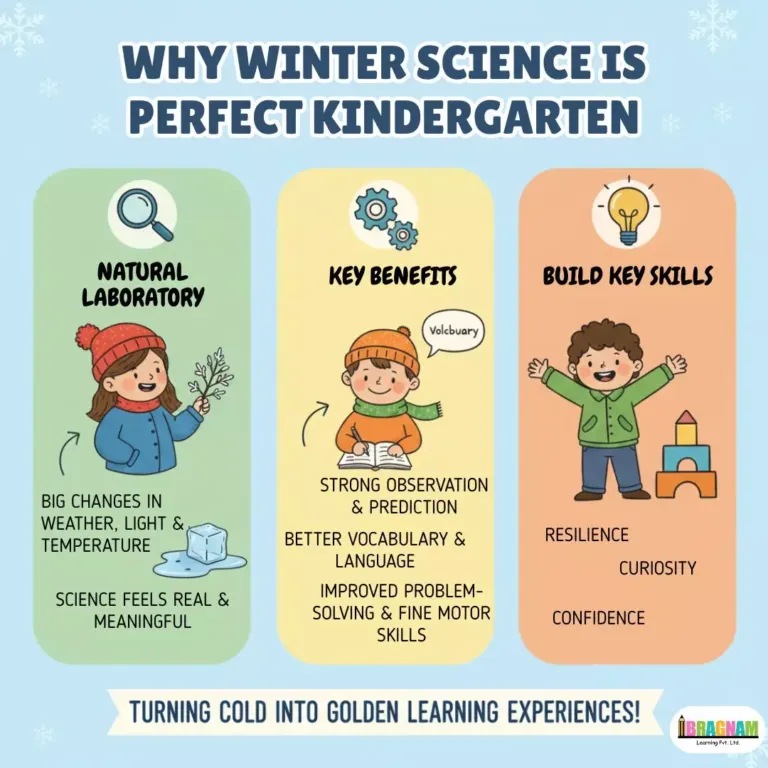
Winter gives a natural “laboratory” where children can see big changes in weather, light, and temperature, making science feel real and meaningful. Even in places without real snow, teachers can recreate winter experiences with ice, water, and sensory materials.
Key benefits for kindergarteners include:
- Stronger observation and prediction skills
- Better vocabulary and language development
- Improved problem-solving and fine motor skills
These activities also support curiosity, resilience, and confidence as children test ideas and see what happens.
Learning Goals in Winter Science Exploration
Winter science exploration can support several early learning goals that align with kindergarten curricula.
Common goals include:
- Observing and describing properties of materials (hot/cold, solid/liquid, rough/smooth)
- Noticing and comparing changes over time (melting, freezing, dissolving)
- Asking questions and making simple predictions (“What will happen if…?”)
- Using simple tools such as droppers, cups, and magnifiers safely
These goals also link naturally with early literacy, as children talk about what they see, draw what happens, and dictate simple “science stories.”
Simple Winter Science Activities for Kindergarten
Below are easy, classroom-friendly ideas you can run in small groups or at learning stations.
1. Melting Ice Exploration
Children explore how ice melts and what can make it melt faster.
You can:
- Freeze colored ice cubes and place them in trays
- Offer warm water, room-temperature water, and salt
- Let children drip, pour, and sprinkle, then talk about what they notice
Concepts covered: states of matter, temperature, and cause-and-effect.
2. Snowstorm in a Jar (Snow-in-a-Bottle)
Even without real snow, children can create a “snowstorm” using a clear jar, water, oil, and small white particles like glitter or tiny foam bits.
Children shake the jar and watch how the “snow” falls and settles, building observation skills and language (“floating,” “sinking,” “swirling”).
3. Animal Tracks and Winter Animals
Use pictures, toy animals, or simple stamps to show how animals leave tracks in snow or mud.
Children can:
- Press toy animal feet into playdough or salt dough “snow”
- Match tracks to animals in picture cards
- Talk about where animals go in winter and how they stay warm
This blends science with early environmental awareness and storytelling.
4. Paper Snowflakes and Symmetry
Folding and cutting paper snowflakes introduces basic geometry and symmetry in a hands-on way.
As children open their snowflakes, guide them to notice:
- Matching sides and repeating shapes
- Different patterns created by different cuts
This supports math skills like shape recognition, patterning, and spatial reasoning.
5. Winter Sensory Bins
Fill tubs with safe materials such as ice cubes, cotton balls, shredded paper, or gel beads to mimic “snow” and “ice.”
Add scoops, cups, and small toys for:
- Pouring and transferring
- Sorting objects by size, texture, or color
- Creating simple winter stories and small-world play
These bins can be especially helpful for children with sensory needs when thoughtfully designed and supervised.
Safety Tips for Winter Science with Young Children
Safety is essential so that winter science exploration stays fun and stress-free for everyone.
Key safety practices:
- Always supervise closely, especially around ice, water, and small loose parts
- Avoid extremely hot or extremely cold materials; test temperatures beforehand
- Use child-safe materials such as water, salt, baking soda, food colouring, and non-toxic craft items
- Remind children about gentle hands, walking slowly, and not tasting the materials
- Keep towels and spare warm clothing nearby for spills and wet sleeves
Clear safety routines help children feel secure and build good habits for future science learning.
Tips to Make Winter Science Exploration Meaningful
A few simple strategies can turn each activity into a rich learning experience.
Try to:
- Start with a question: “What do you think will happen if we sprinkle salt on the ice?”
- Encourage children to describe what they see, feel, and hear using full sentences
- Add drawing or simple charts where children can record what they noticed
- Connect activities to daily life (“How do we stay warm in winter?” “Where does water go when ice melts?”)
Linking winter science exploration with stories, songs, and circle-time discussions keeps learning integrated and memorable.
Integrating Winter Science into Your Kindergarten Day
Winter science exploration does not need to be a separate “big project.” It can fit into everyday routines.
Ideas for easy integration:
- Morning circle: Talk about the weather and track temperature changes on a simple chart
- Learning centres: Set up a “winter lab” table with rotating activities (ice melting one day, snowflakes the next)
- Outdoor time: Look for frost, dew, puddles, shadows, and seasonal changes in plants and trees
This approach helps children see science as part of their real world, not just a “special subject.”
FAQ: Winter Science Exploration for Kindergarten
1. What is winter science exploration in kindergarten?
Winter science exploration is a set of playful, hands-on activities that help young children investigate ice, water, weather, and seasonal changes using simple materials and guided questions.
2. Are winter science activities safe for kindergarteners?
Yes, winter science activities are safe when adults supervise closely, use comfortable temperatures, and choose child-friendly ingredients like water, salt, baking soda, and food colouring.
3. Do we need real snow for winter science?
No, most winter science activities can be done with ice cubes, water, paper, and sensory materials, making them suitable for classrooms that do not get real snow.
4. What skills do children develop through winter science exploration?
Children develop observation, prediction, comparison, problem-solving, language skills, and fine motor control as they explore, test ideas, and describe what they see.
5. How often should I include winter science in my kindergarten plan?
Even one or two short winter science activities each week can make a big difference, especially when they are linked to stories, art, and outdoor observations.
Conclusion
Winter science exploration for kindergarten transforms cold days into warm, joyful learning moments where children feel like real scientists. With simple materials, clear safety routines, and curious questions, teachers and parents can nurture lifelong curiosity and confidence in young learners