
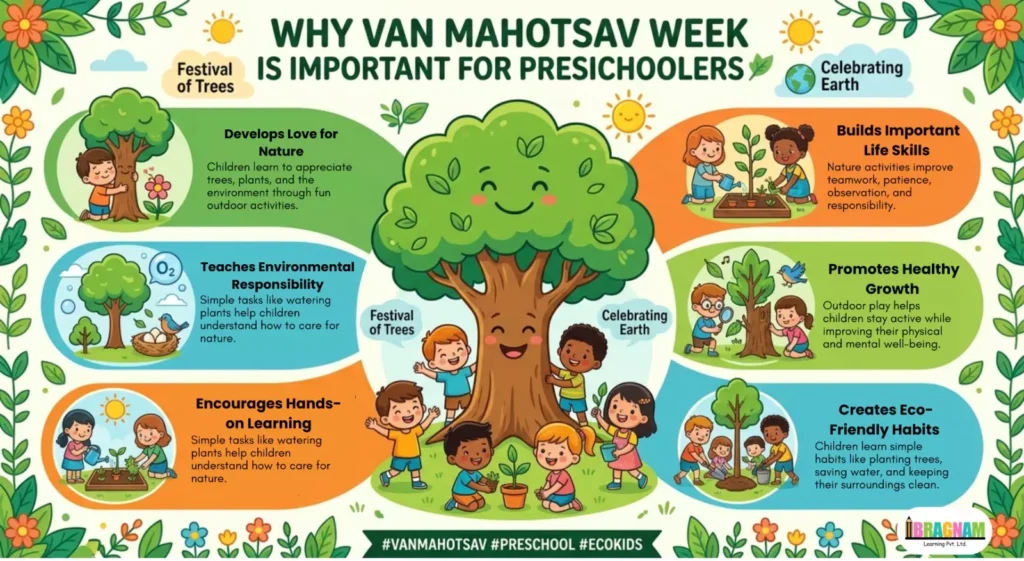
Van Mahotsav Week is more than just a tree-planting celebration—it’s an opportunity to nurture young minds with values that last a lifetime. Teaching children to appreciate nature from an early age helps them develop responsibility, kindness, and environmental awareness.
Preschool is the perfect stage to introduce simple and enjoyable activities that connect children with the natural world. Through planting seeds, storytelling, outdoor exploration, and creative crafts, educators and parents can inspire children to become future caretakers of the planet.
In this article, we’ll explore how to seed care for nature in pre school with engaging ideas, practical activities, and meaningful lessons that make Van Mahotsav Week memorable for every child.
Why Van Mahotsav Week is Important for Preschoolers
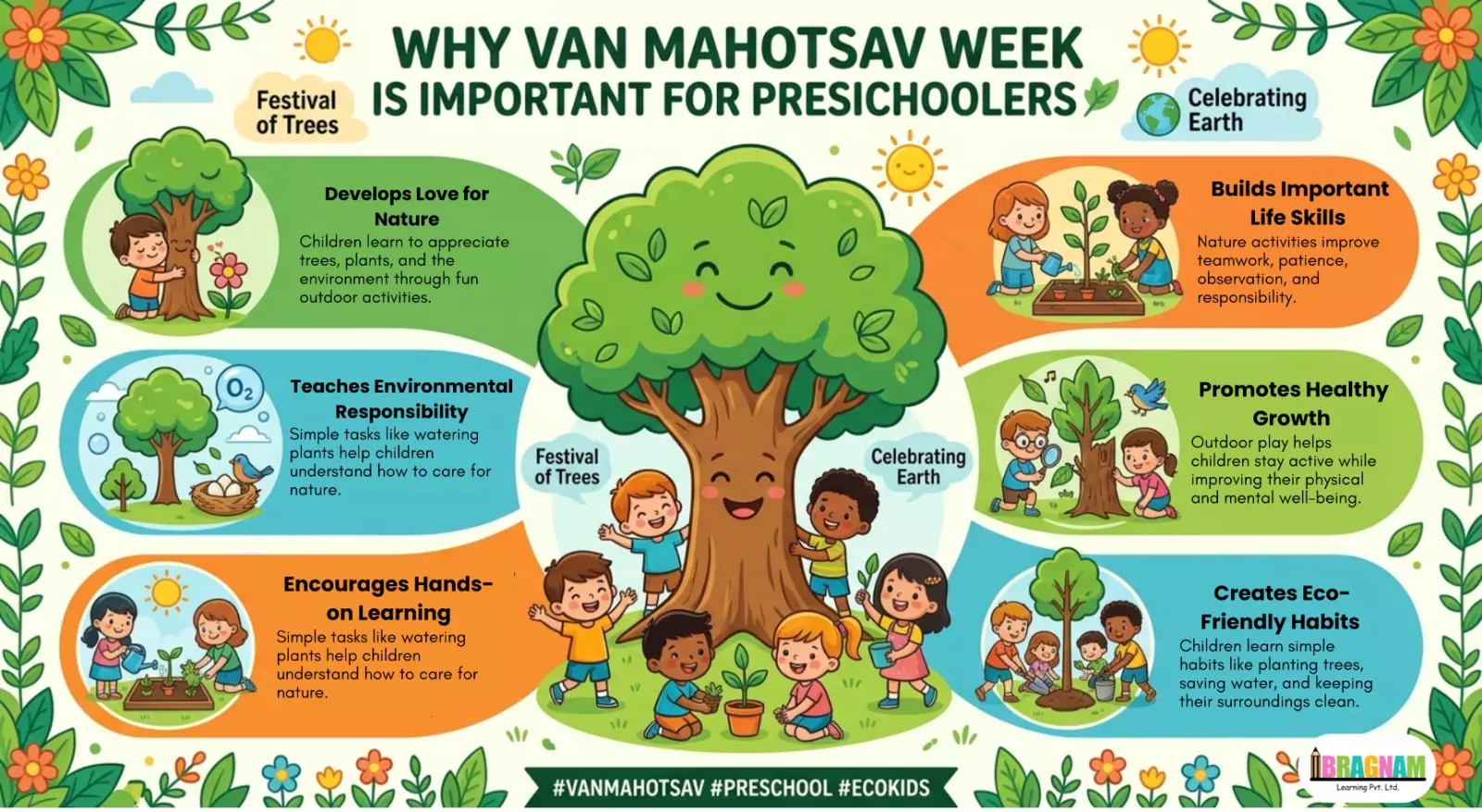
Van Mahotsav, meaning “Festival of Trees,” is celebrated every year during the first week of July in India. It encourages people to plant trees and spread awareness about environmental conservation.
For preschoolers, Van Mahotsav Week provides opportunities to:
- Develops Love for Nature
- Teaches Environmental Responsibility
- Encourages Hands-on Learning
- Builds Important Life Skills
- Promotes Healthy Growth
- Creates Eco-Friendly Habits.
How to Seed Care for Nature in Pre School
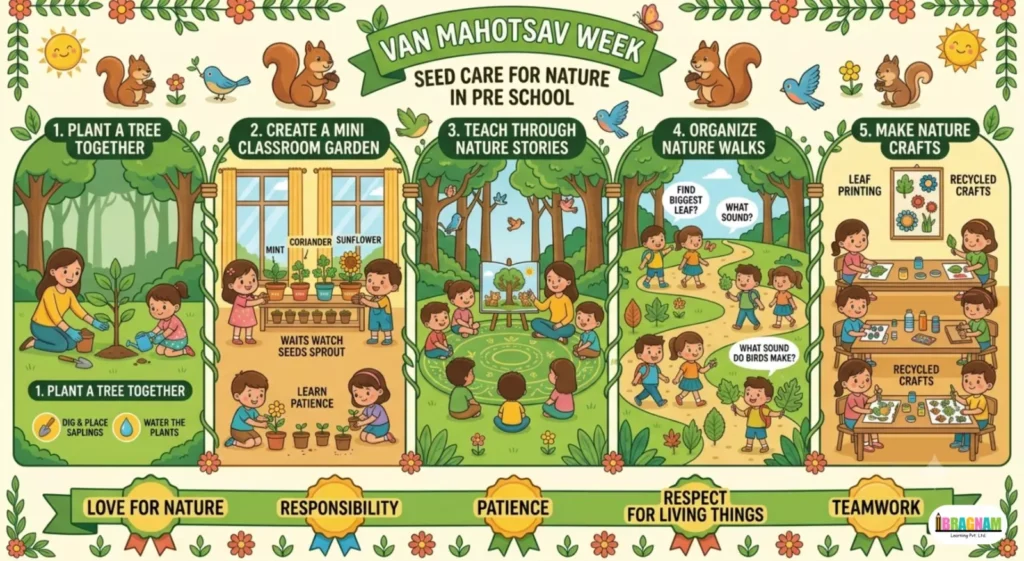
Teaching children to care for nature doesn’t require complicated lessons. Small, meaningful activities can create lasting impressions.
1. Plant a Tree Together
Tree planting is the heart of Van Mahotsav Week.
Children can:
- Dig small holes.
- Place saplings carefully.
- Water the plants.
- Name their trees.
Assigning each child a plant helps build responsibility and excitement.
2. Create a Mini Classroom Garden
A small garden teaches children patience and observation.
Plant easy-growing options like:
- Mint
- Coriander
- Marigold
- Sunflower
- Tulsi
Watching seeds sprout into plants helps children understand the beauty of nature.
3. Teach Through Nature Stories
Children love stories.
Read books or tell stories about:
- Trees helping animals
- Forest adventures
- Birds building nests
- Caring for the Earth
Storytelling makes environmental lessons easier to understand and remember.
4. Organize Nature Walks
Take children outdoors to observe:
- Different leaves
- Birds
- Flowers
- Butterflies
- Trees
Ask simple questions like:
- Which leaf is the biggest?
- What sounds do birds make?
- How many flowers can you find?
Nature walks encourage curiosity and observation.
5. Make Nature Crafts
Collect natural materials such as:
- Fallen leaves
- Twigs
- Flowers
- Pebbles
Create:
- Leaf printing
- Nature collages
- Tree paintings
- Flower bookmarks
Craft activities improve creativity while reinforcing environmental appreciation.
Fun Van Mahotsav Week Activities for Preschool
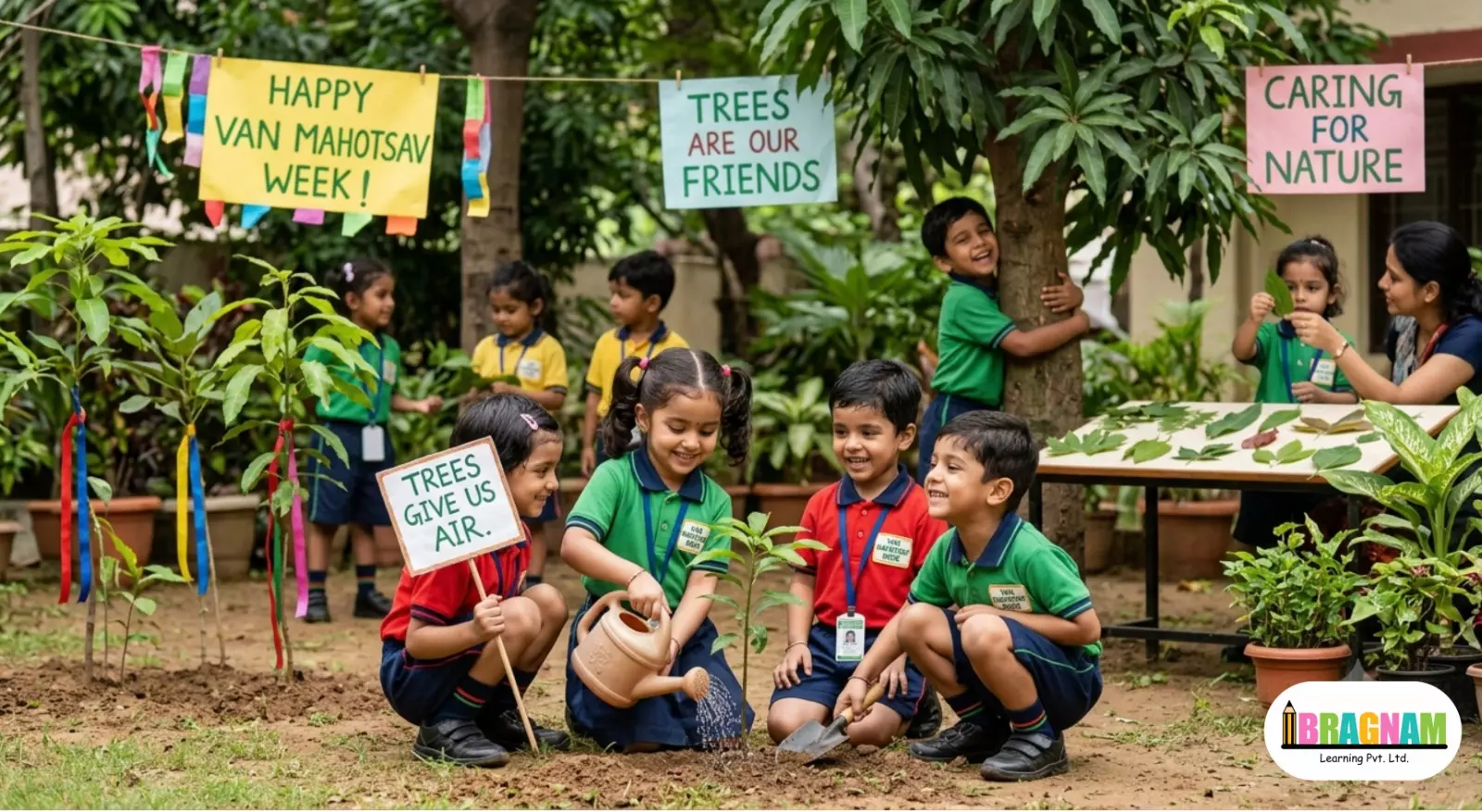
Here are engaging classroom activities that children will love.
Seed Planting Activity
Give each child:
- A small pot
- Soil
- Seeds
- Water
Let them decorate their pots before planting.
“Adopt a Plant” Program
Each child takes responsibility for one plant by:
- Watering it
- Observing growth
- Keeping it clean
This builds responsibility and empathy.
Tree Hugging Day
Encourage children to hug trees and discuss:
- Why trees are important
- How trees help animals
- Why we should protect forests
Children naturally connect with hands-on experiences.
Leaf Identification Game
Collect different leaves and let children:
- Compare shapes
- Compare colors
- Sort by size
This improves observation skills.
Eco-Friendly Art Competition
Use recycled materials such as:
- Cardboard
- Newspapers
- Bottle caps
- Paper rolls
Children learn that many items can be reused instead of thrown away.
Environmental Values Preschoolers Learn During Van Mahotsav Week
When we focus on how to seed care for nature in pre school, children gradually develop lifelong values.
These include:
Love for Nature
Children begin appreciating plants, flowers, insects, and animals.
Responsibility
Daily watering and caring for plants teach accountability.
Patience
Watching plants grow teaches that good things take time.
Respect for Living Things
Children understand that trees and plants are living organisms needing care.
Teamwork
Group gardening activities encourage cooperation and communication.
Tips for Teachers and Parents
Parents and teachers play an essential role in encouraging eco-friendly habits.
Here are some practical ideas:
- Be a role model by caring for plants.
- Reduce plastic use around children.
- Encourage outdoor play regularly.
- Read nature-themed books.
- Celebrate small environmental achievements.
- Involve children in watering household plants.
- Praise eco-friendly behavior.
Simple daily habits often leave the strongest impact.
Simple Nature Pledge for Preschool Children
Children can repeat this pledge during Van Mahotsav Week:
“I will love trees. I will protect plants. I will keep my surroundings clean. I will save water. I will care for nature every day.”
This creates a meaningful connection with environmental responsibility.
Benefits of Celebrating Van Mahotsav Week in Preschool
Celebrating Van Mahotsav Week offers numerous developmental benefits:
- Enhances environmental awareness.
- Builds fine and gross motor skills.
- Encourages curiosity.
- Develops empathy toward living things.
- Supports social interaction.
- Improves communication skills.
- Strengthens observation and scientific thinking.
- Promotes healthy outdoor learning.
Children not only enjoy the activities but also gain valuable life lessons.
Conclusion
Van Mahotsav Week is a wonderful opportunity to inspire young children to become responsible and caring citizens. By learning how to seed care for nature in pre school, educators and parents can help children build lifelong habits that protect the environment.
Simple activities like planting trees, caring for gardens, nature walks, storytelling, and eco-friendly crafts make environmental education enjoyable and meaningful. When children develop a connection with nature early in life, they grow into adults who value sustainability and understand the importance of protecting our planet.
This Van Mahotsav Week, let every seed planted become a symbol of hope, responsibility, and a greener future for generations to come.