
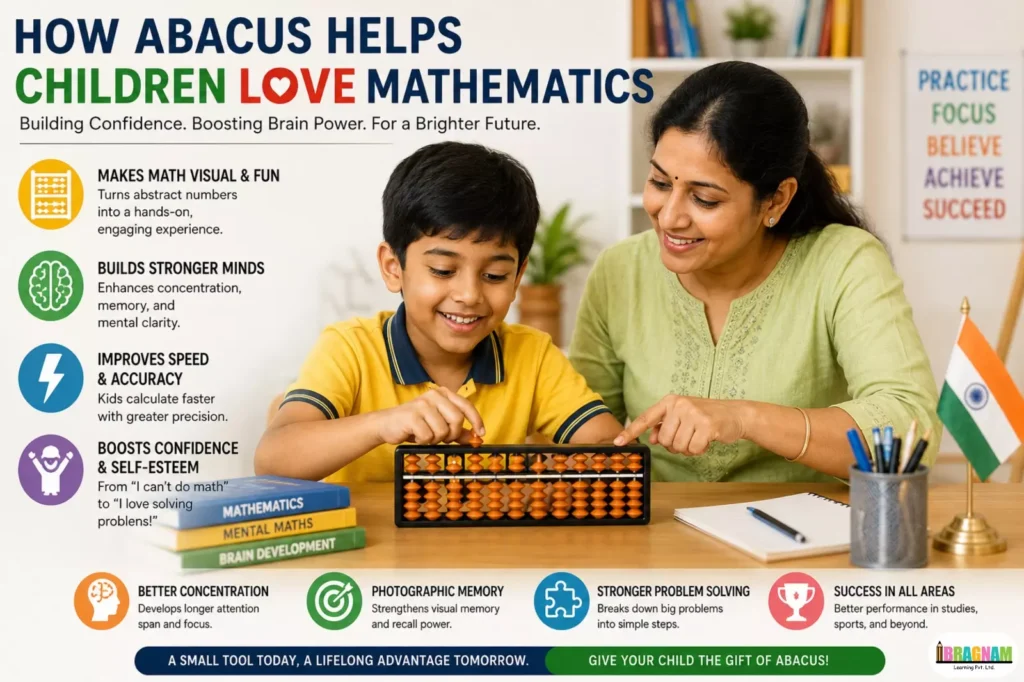
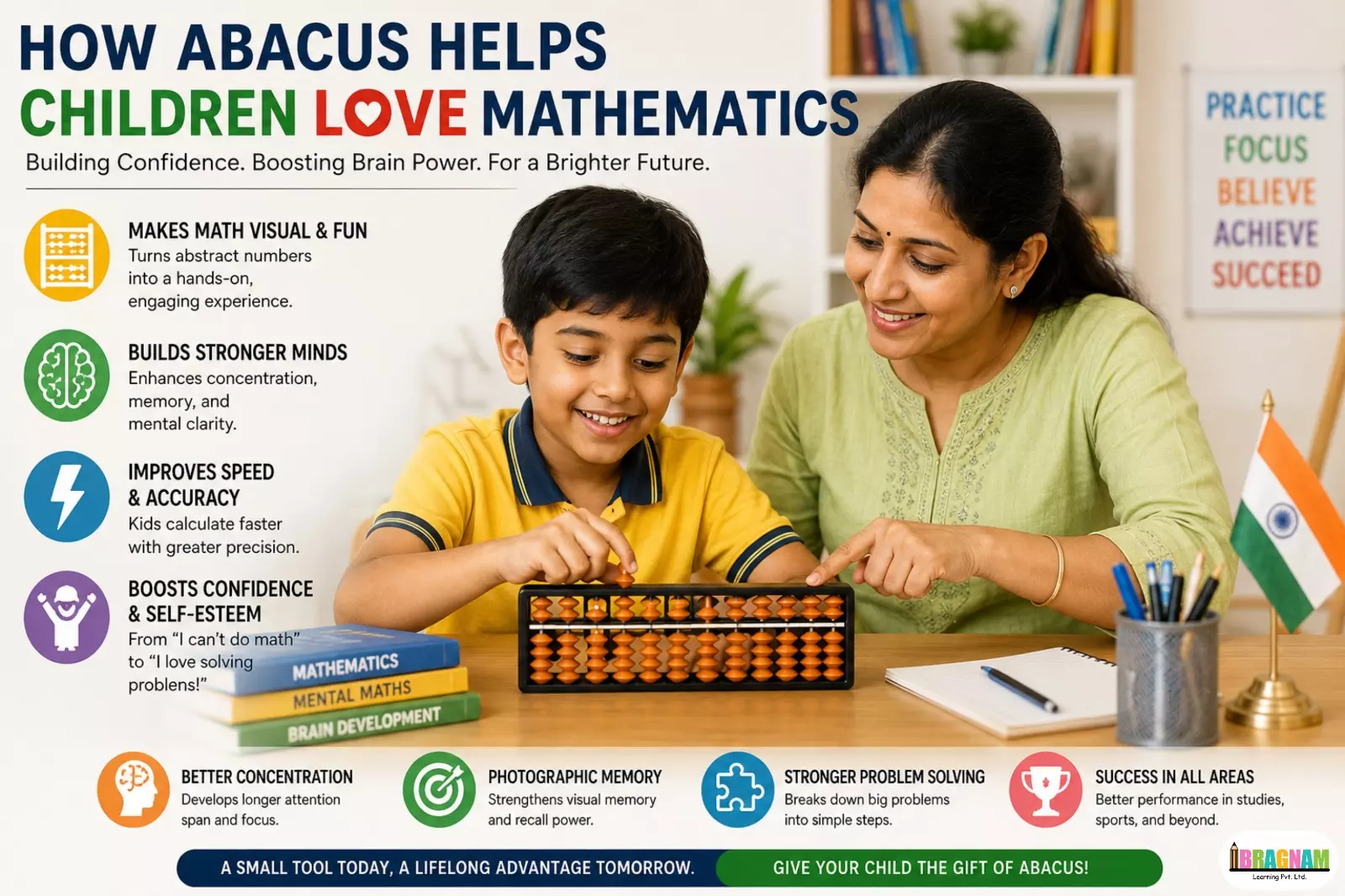
For many children, mathematics feels like an abstract, intimidating world of squiggly lines and rigid rules. It is not uncommon to hear a child say, “I’m just not a math person.” But what if the problem isn’t their capability? What if it is simply the way they are visualizing the numbers?
Enter the abacus—a counting tool that dates back thousands of years but remains one of the most powerful secrets to modern visual learning. Far from an obsolete relic, this simple frame of rows and beads is transforming how young minds interact with numbers.
If you want to turn math anxiety into curiosity and confidence, here is exactly how abacus helps children love mathematics by changing the way they see the world of numbers.
Why Traditional Math Breaks Down for Young Learners
Before looking at how the abacus works, it helps to understand why standard pencil-and-paper math causes so many tears at the kitchen table.
When a child looks at the number 7, they are looking at a symbol. It doesn’t inherently look like seven of anything. To solve a problem like $7 + 5$, a young brain has to hold multiple abstract concepts in its head simultaneously, count mentally, and remember a set of rules.
When a child gets overwhelmed by this mental juggling act, anxiety sets in. Once a child associates math with stress, their brain’s working memory actually decreases, making the problem even harder to solve. To break this cycle, children need a bridge from the abstract to the physical.
The Magic of the Moving Bead: How Abacus Helps Children Love Mathematics
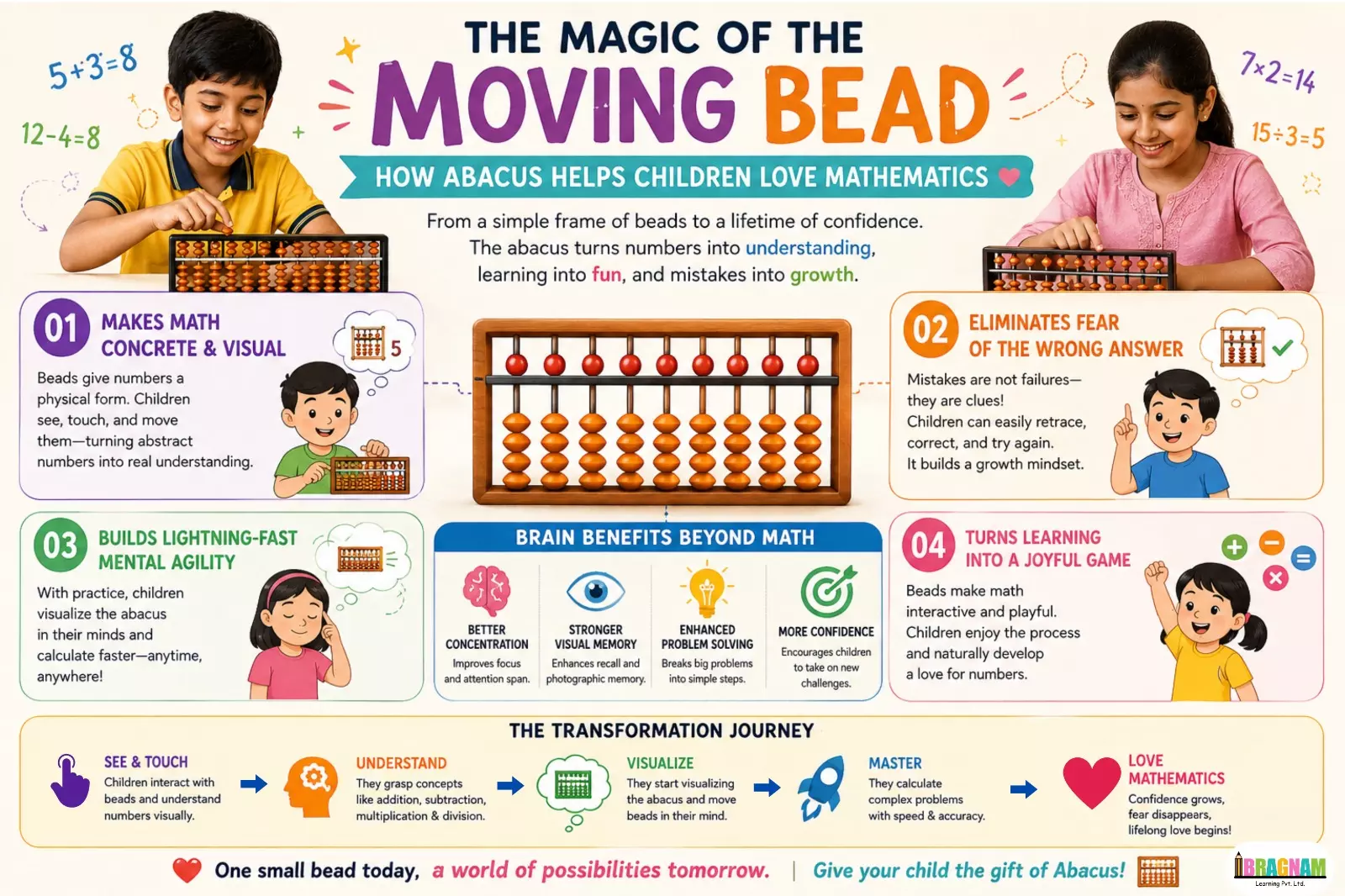
The abacus provides that exact bridge. It takes numbers off the flat, scary page and puts them directly into a child’s hands. Here is a breakdown of why this mechanical shift completely changes a student’s attitude toward math.
1. It Makes Math Concrete and Visual
On an abacus, numbers have a physical weight, color, and position. When a child calculates, they aren’t just guessing a number; they are physically sliding beads up and down. This tactile feedback activates both the visual and kinesthetic parts of the brain. They don’t just learn that $2 + 3 = 5$; they physically see two beads join three beads to create a solid group of five.
2. It Eliminates the Fear of “The Wrong Answer”
In a typical math workbook, an incorrect answer is met with a harsh red X. On an abacus, math feels more like a game or a puzzle. If a calculation goes wrong, the child doesn’t feel like a failure—they can easily trace their steps back through the rows of beads, find where a bead went the wrong way, and slide it back. It encourages a growth mindset where mistakes are just steps in a puzzle.
3. It Builds Lightning-Fast Mental Agility
As children progress with abacus training, something incredible happens: they stop needing the physical tool entirely. They learn to visualize the abacus frame in their mind’s eye.
This technique, known as Mental Abacus, allows children to calculate complex arithmetic—sums involving hundreds or thousands—in seconds, simply by moving imaginary beads in the air.
When a child realizes they can calculate faster than an adult using a smartphone calculator, their confidence skyrockets. That sense of mastery is exactly how abacus helps children love mathematics.
Cognitive Benefits Far Beyond the Math Classroom
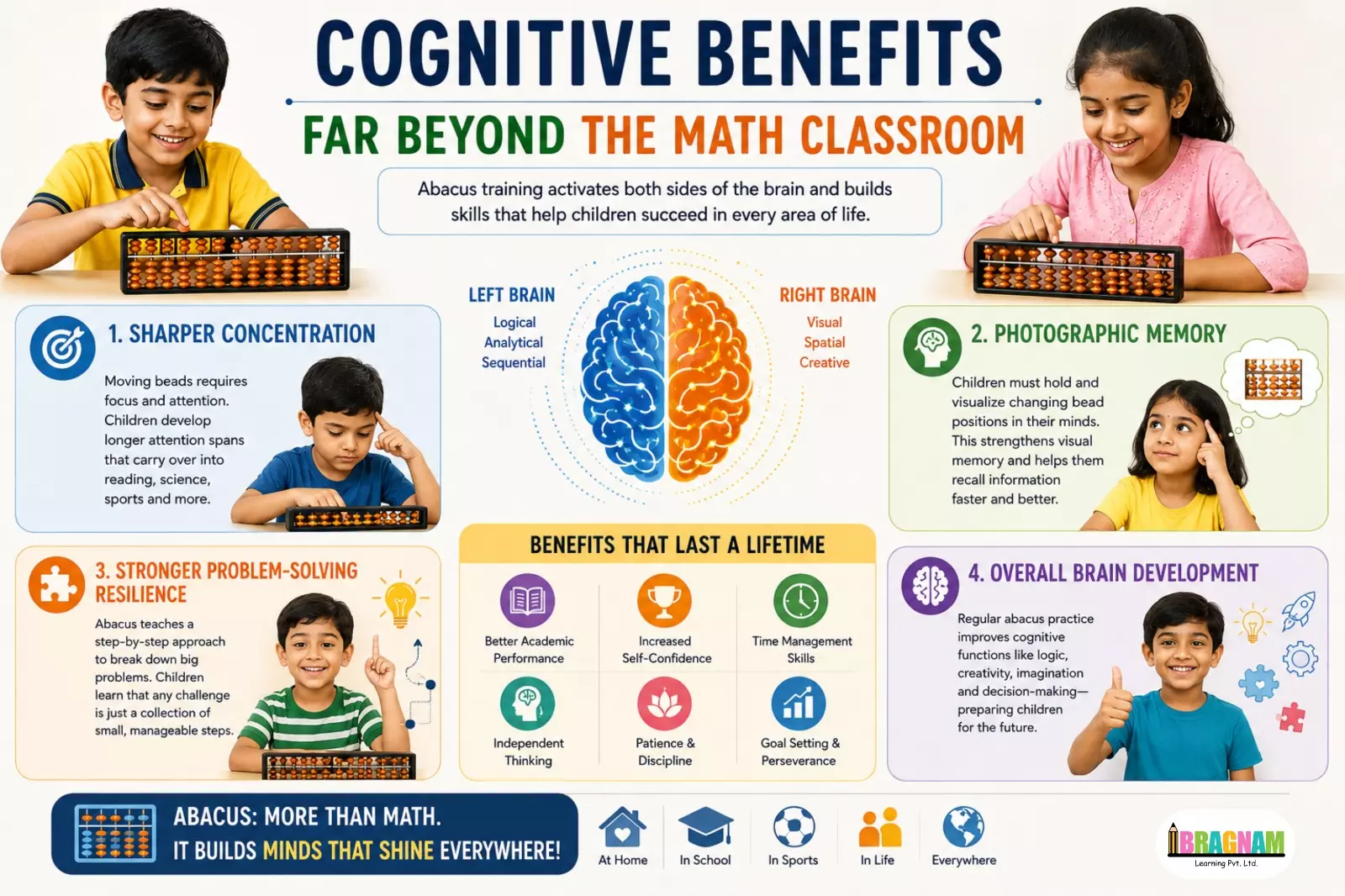
While the immediate goal might be surviving third-grade homework, abacus training rewires a child’s approach to learning across the board. Neuroscientists have noted that abacus practice engages both the left hemisphere (logical/linguistic) and the right hemisphere (visual/spatial) of the brain.
- Sharper Concentration: Moving beads requires intense, focused attention. Children naturally develop longer attention spans that carry over into reading, science, and sports.
- Photographic Memory: Because children must hold the image of the changing bead positions in their minds, their spatial and visual memory capacity expands dramatically.
- Stronger Problem-Solving Resilience: Abacus teaches a systematic, step-by-step approach to breaking down large numbers. Children quickly learn that big, scary problems are just collections of small, manageable pieces.
How to Introduce the Abacus at Home
If you want to leverage this tool to ease your child’s math anxiety, you don’t need to be a math genius yourself. You just need to keep the initial experience positive and playful.
- Keep Sessions Short: A child’s brain tires quickly under new cognitive loads. Limit abacus play to 10–15 minutes a day. Consistency beats duration every time.
- Gamify the Practice: Don’t hand them a sheet of equations. Instead, ask them to keep score of a board game using the abacus, or calculate the number of blue cars they see on a walk.
- Celebrate the Effort, Not the Speed: In the beginning, precision and form matter more than racing through a problem. Praise their focus and how they corrected their own mistakes.
Conclusion: A Lifelong Gift of Number Confidence
Math is not a talent you are born with; it is a relationship you build. When children struggle with mathematics, it is rarely due to a lack of intelligence—it is almost always a lack of connection.
By transforming numbers from cold symbols on paper into dynamic, tangible beads, we pull back the curtain on how numbers actually interact. Understanding how abacus helps children love mathematics allows parents and educators to replace anxiety with a sense of play, curiosity, and absolute confidence. Giving your child an abacus doesn’t just help them pass their next exam; it alters their relationship with logic and problem-solving for the rest of their lives.