
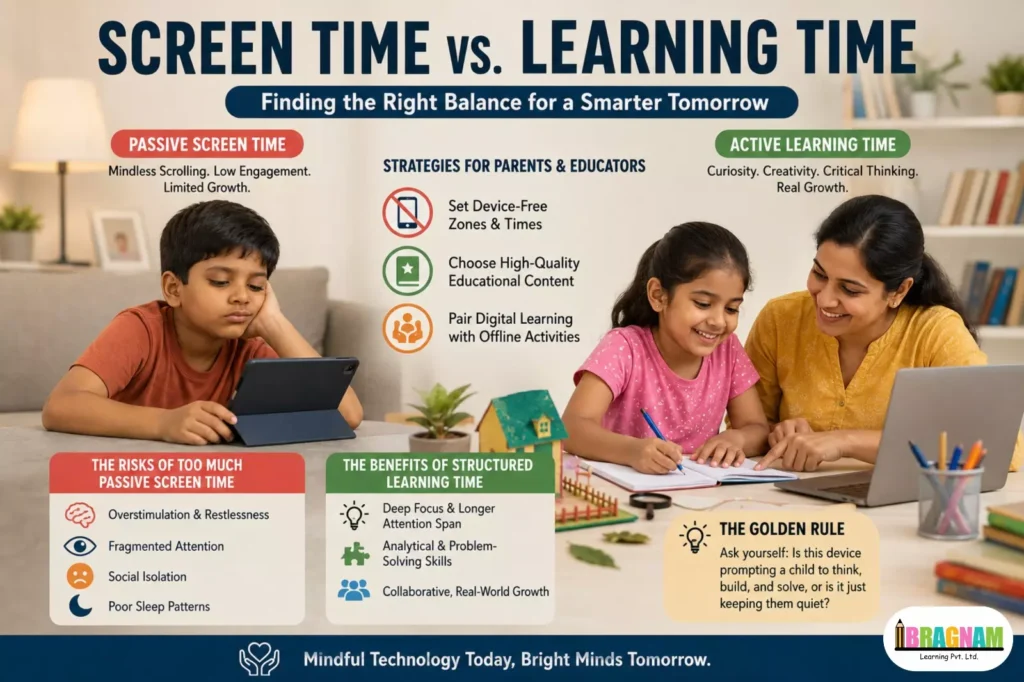
“Put that tablet away and do your homework!”
If you are a parent or educator, you have likely uttered some variation of this phrase more times than you can count. In today’s digital age, screens are everywhere. They are in our pockets, on our desks, and increasingly, in our classrooms. This widespread availability has sparked a massive debate: How do we manage screen time vs. learning time?
The modern challenge isn’t about eliminating technology entirely; it’s about transformation. We need to shift the focus from mindlessly consuming content to actively engaging with digital tools.
Let’s dive into how we can find that perfect equilibrium, ensuring technology serves as a bridge to knowledge rather than a barrier to real-world development.
The Digital Dilemma: Consumption vs. Creation
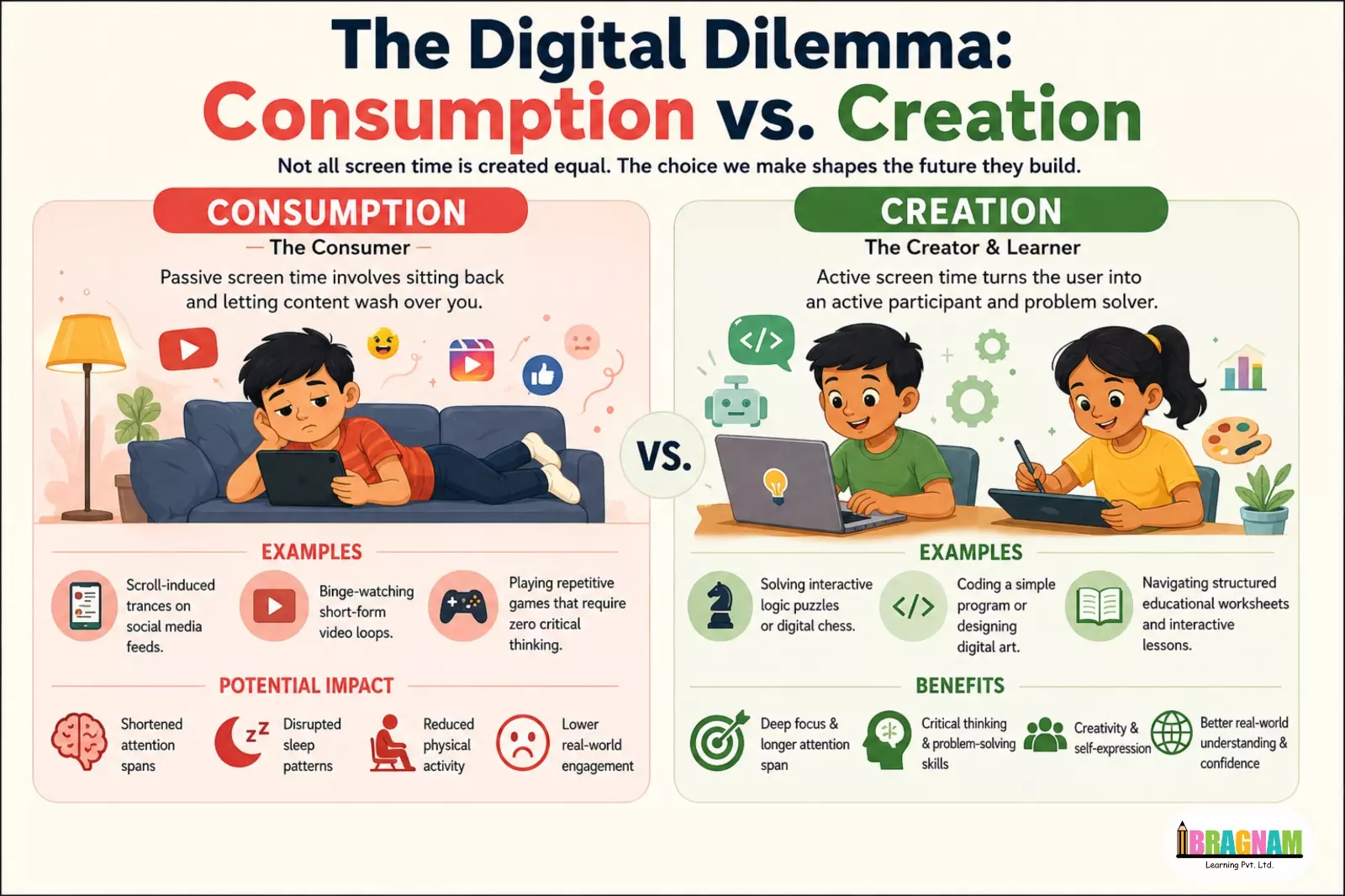
Not all screen time is created equal. To successfully balance screen time vs. learning time, we must first understand the fundamental difference between passive and active digital engagement.
Passive Screen Time (The Consumer)
Passive screen time involves sitting back and letting content wash over you. Examples include:
- Scroll-induced trances on social media feeds.
- Binge-watching short-form video loops.
- Playing repetitive games that require zero critical thinking.
While fine for short bursts of relaxation, excessive passive screen time can lead to shortened attention spans, disrupted sleep patterns, and reduced physical activity.
Active Screen Time (The Creator and Learner)
Active screen time, on the other hand, turns the user into an active participant. This is where digital technology transforms into a powerful educational tool. Examples include:
- Solving interactive logic puzzles or digital chess.
- Coding a simple program or designing digital art.
- Navigating structured educational worksheets and interactive lessons.
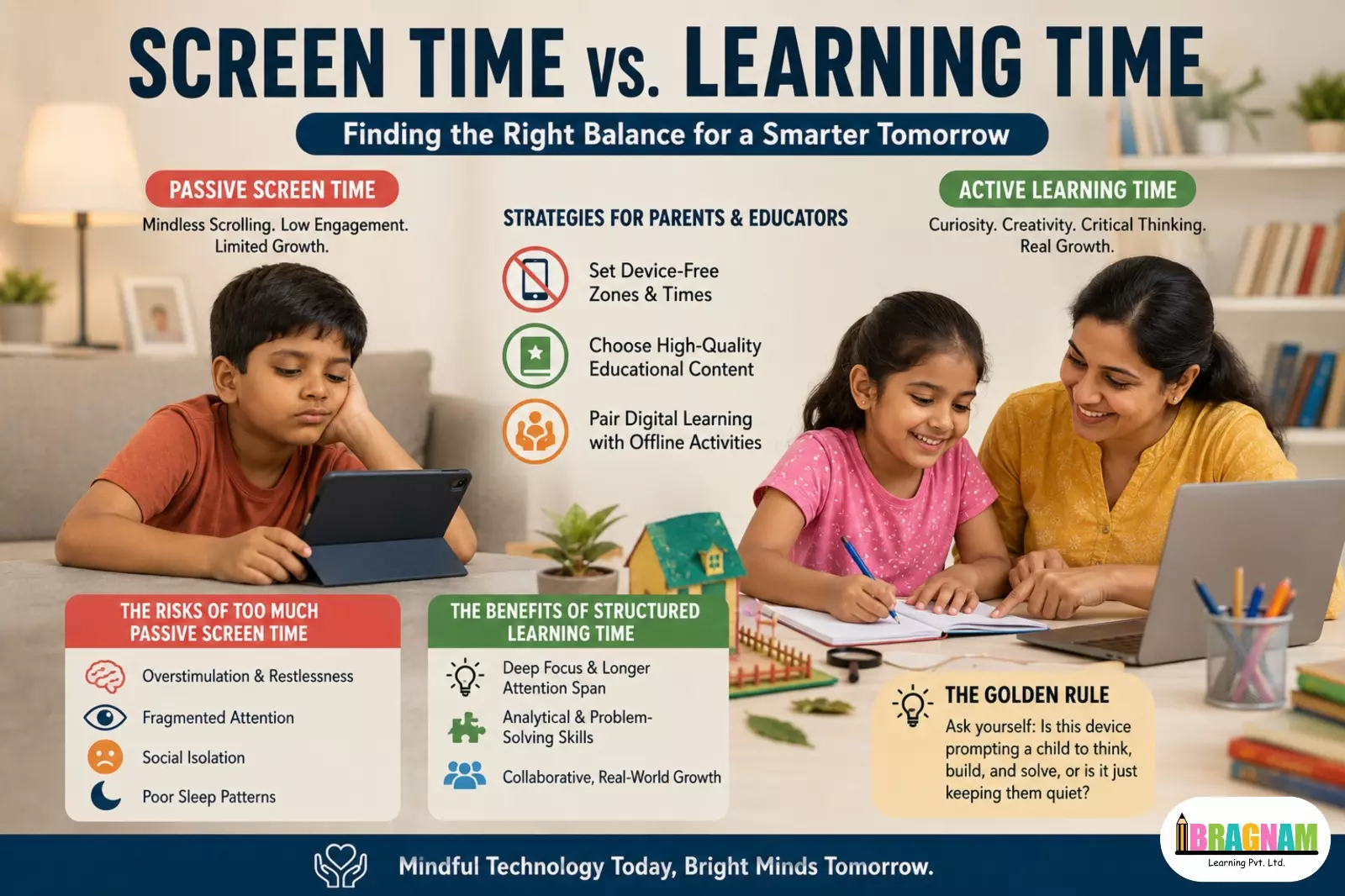
The Golden Rule: When evaluating technology, ask yourself: Is this device prompting a child to think, build, and solve, or is it just keeping them quiet?
Striking the Balance: Strategies for Parents and Educators
Finding the sweet spot between digital learning and offline life doesn’t require a strict, authoritarian ban on devices. Instead, it requires intentional simplicity and clear structure.
1. Establish “Device-Free” Zones and Times
Boundaries create a sense of predictability and calm. Designate specific areas and times in your routine where screens are strictly off-limits.
- The Dinner Table: Keep mealtimes reserved for face-to-face conversation and connection.
- One Hour Before Bed: The blue light emitted by screens disrupts the production of melatonin, a hormone necessary for deep sleep. Swapping a tablet for a physical book can drastically improve sleep quality.
2. Prioritize High-Quality Educational Content
When tech is integrated into learning routines, ensure the quality remains high. Look for applications that encourage multi-source synthesis, active recall, and adaptive learning levels rather than flashy, over-stimulating graphics that offer little educational value.
3. Pair Digital Learning with Offline Activities
One of the most effective ways to solidify digital lessons is to anchor them in the physical world.
- If a child completes a digital lesson on botany, take a walk outside to find and categorize real leaves.
- If they watch a video about early childhood DIY crafts, gather household items like cardboard boxes, bottle caps, and safety scissors to build a physical project together.
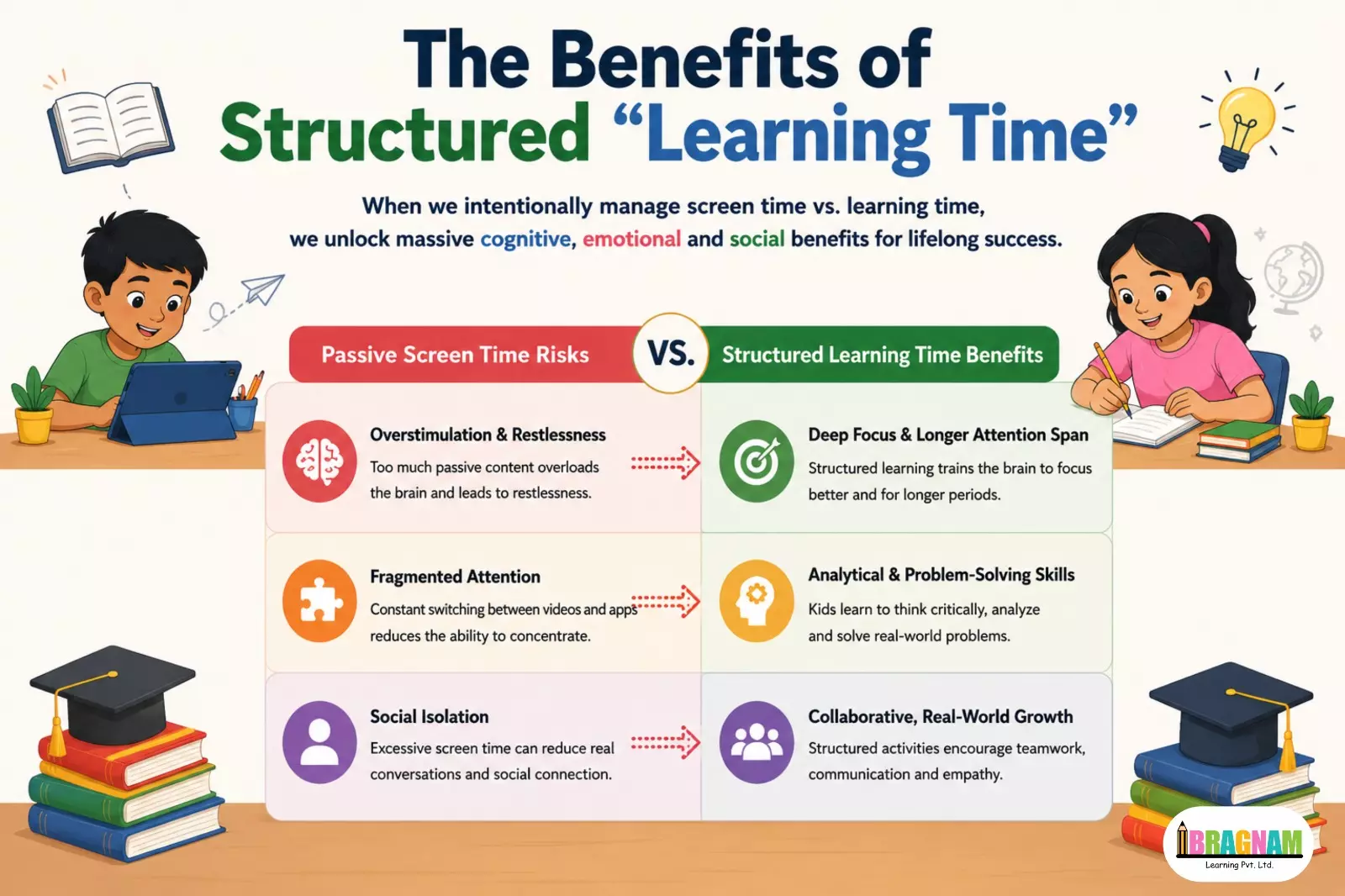
The Benefits of Structured “Learning Time”
When we intentionally manage screen time vs. learning time, we unlock massive cognitive and emotional benefits. Structured learning time—both digital and offline—fosters a focused mind.
By prioritizing active cognitive engagement over passive scrolling, children develop a healthier relationship with technology. They begin to view devices as tools for discovery rather than just escape hatches from boredom.
Conclusion: Emphasizing Mindful Technology Use
At the end of the day, the screen time vs. learning time debate isn’t about declaring technology an enemy. Technology is an incredible asset that can open doors to world-class learning, creative expression, and global connection.
The goal is to master intentionality. By setting clear boundaries, choosing high-quality active platforms, and balancing digital discovery with tactile, real-world exploration, we can raise a generation of mindful, sharp, and balanced learners.