
When you look at a toddler covered in finger paint or a preschooler proudly handing you a lopsided paper plate mask, you might just see a cute afternoon mess. But underneath those bright smudges of color, something extraordinary is happening. The child is actively building their brain.
In today’s fast-paced digital world, it’s easy to overlook the simple joy of physical creation. However, the role of art and craft in early life extends far beyond keeping children quiet on a rainy afternoon. It is a foundational pillar of early childhood development, influencing everything from how a child moves their fingers to how they manage big emotions.
Let’s dive into why scissors, glue, and a box of crayons are some of the most powerful learning tools you can give a young child.
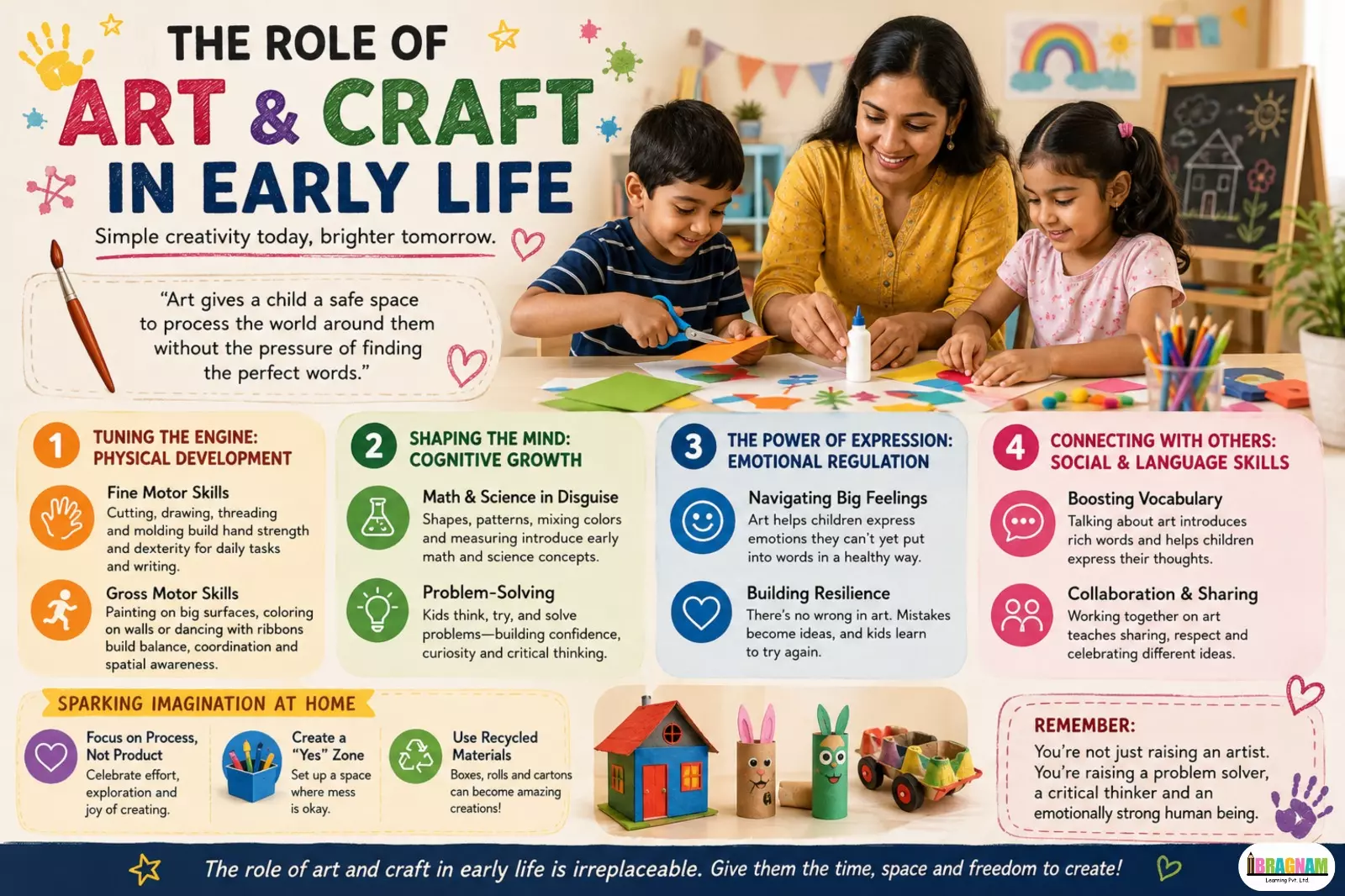
1. Tuning the Engine: Physical Development
When a child manipulates a paintbrush or tears paper into tiny pieces, they are participating in a high-intensity workout for their physical coordination.
Fine Motor Skills and Hand-Eye Coordination
Long before a child learns to write their name with a pencil, they need to build the tiny muscles in their hands and fingers. Activities like threading beads, using safety scissors, and molding playdough are essential. These actions build hand strength and dexterity, which directly translates to everyday tasks like tying shoes, buttoning a shirt, and eventually, writing legibly.
Gross Motor Development
Art isn’t always a seated activity. Painting on a giant cardboard box, drawing with sidewalk chalk, or dancing while waving colorful ribbons requires large muscle groups. These big movements help children develop a sense of spatial awareness and balance.
2. Shaping the Mind: Cognitive and Academic Growth
Art is essentially a playground for the brain. It introduces complex concepts in a tangible, low-stakes environment.
Math and Science in Disguise
When children participate in craft projects, they are constantly experimenting with fundamental math and science concepts:
- Geometry: Recognizing shapes to cut out a house or a tree.
- Spatial relations: Understanding what “under,” “over,” or “next to” means when gluing objects.
- Chemistry: Watching two colors mix to create a brand-new color (e.g., yellow and blue making green).
Problem-Solving and Critical Thinking
Every craft project poses a unique challenge: How do I make this cardboard tube stand up? What happens if the glue isn’t sticky enough? By navigating these small hurdles, children learn to think critically, iterate on their ideas, and find creative solutions to problems.
3. The Power of Expression: Emotional Regulation
Young children often experience massive emotions that they don’t yet have the vocabulary to express. This is where the emotional role of art and craft in early life truly shines.
Navigating Big Feelings
A child who is frustrated might aggressively scribble with a black marker. A child who is happy might use bright yellows and pinks. Art acts as a healthy emotional release valve. It allows kids to externalize internal stress, anxiety, or pure excitement.
Building Resilience through Mistakes
There is no “wrong” way to make process art (art focused on the doing, not the final product). If a child tears their paper by accident, they can glue it back together or turn the rip into something else. This teaches them a vital life lesson: mistakes are not failures; they are just opportunities to pivot.
4. Connecting with Others: Social and Language Skills
Art can be a highly social activity, providing a natural bridge for children to interact with peers and adults.
Boosting Vocabulary
When you talk to a child about their artwork, you introduce rich descriptive language. Instead of just saying “Nice job,” you might say, “Look at those vibrant strokes,” or “How did you get that bumpy texture?” This expands their vocabulary and helps them learn to articulate their thoughts.
Collaboration and Sharing
Working on a shared mural at a preschool table teaches children the art of negotiation. They learn to share materials, respect another person’s creative space, and celebrate the diverse ideas of their peers.
Sparking Imagination: How to Encourage Art at Home
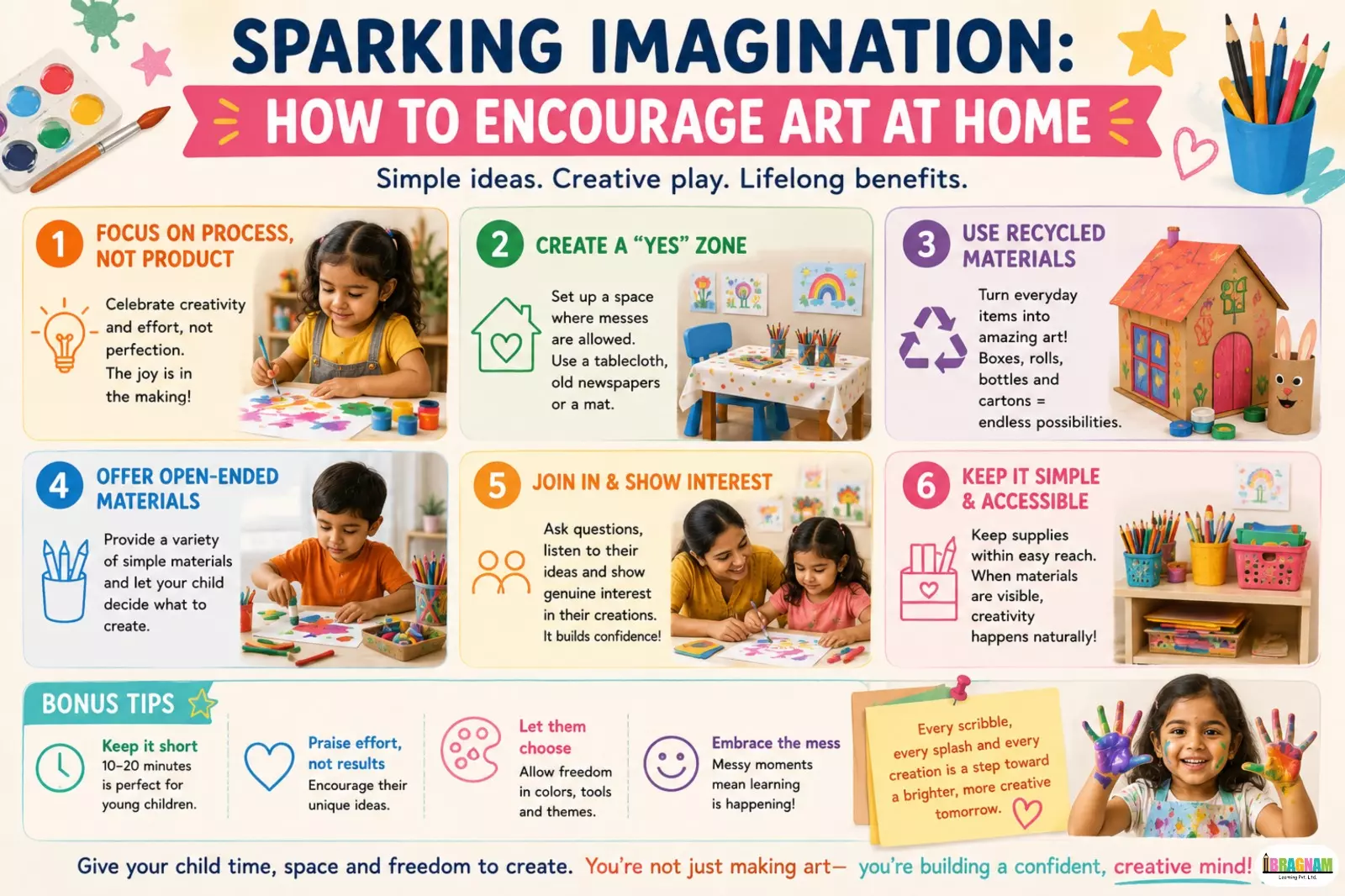
You don’t need a massive budget or a dedicated studio to unlock the benefits of art and craft.
- Focus on Process, Not Product: Stop worrying if the final project looks like the picture on Pinterest. Care more about the focus and joy your child experiences while creating it.
- Create a “Yes” Zone: Set up a small table where messes are allowed. Cover it with an old tablecloth or newspaper so you aren’t stressed about stains.
- Use Recycled Materials: Empty egg cartons, toilet paper rolls, and cereal boxes make incredible canvases and building materials.
Conclusion: Investing in Creativity
The role of art and craft in early life is irreplaceable. It is the vehicle through which children explore their environment, test their boundaries, and discover who they are. By providing children with the time, space, and freedom to create, we aren’t just raising future artists — we are raising resilient problem solvers, critical thinkers, and emotionally healthy individuals.
So, the next time you see a mess of glitter and glue, take a deep breath. You aren’t just looking at a messy table; you are looking at a mind at work.