
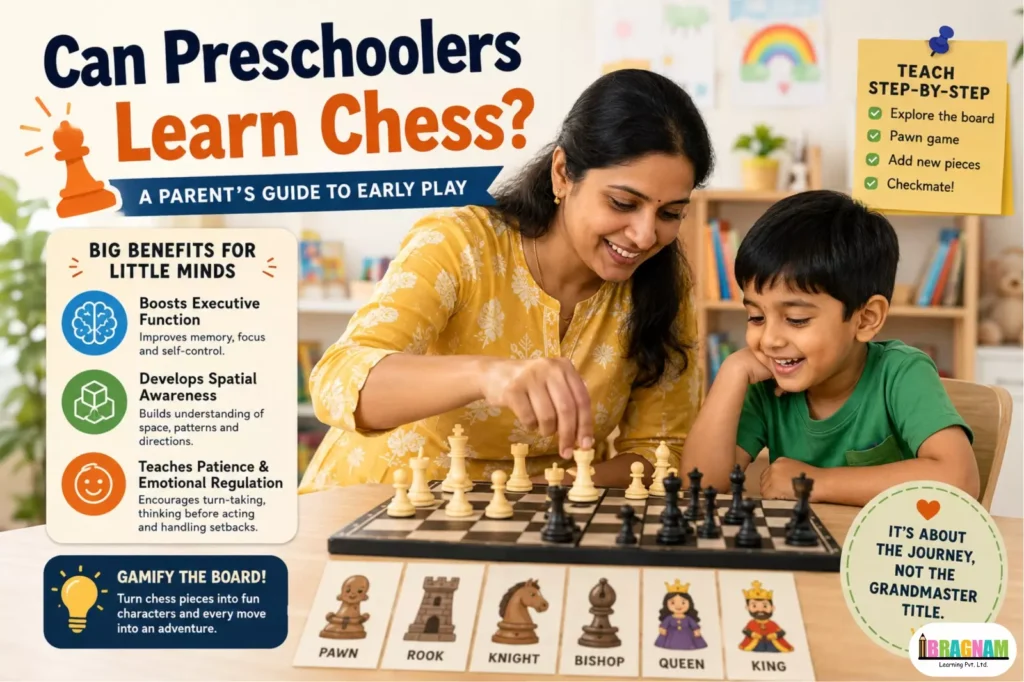
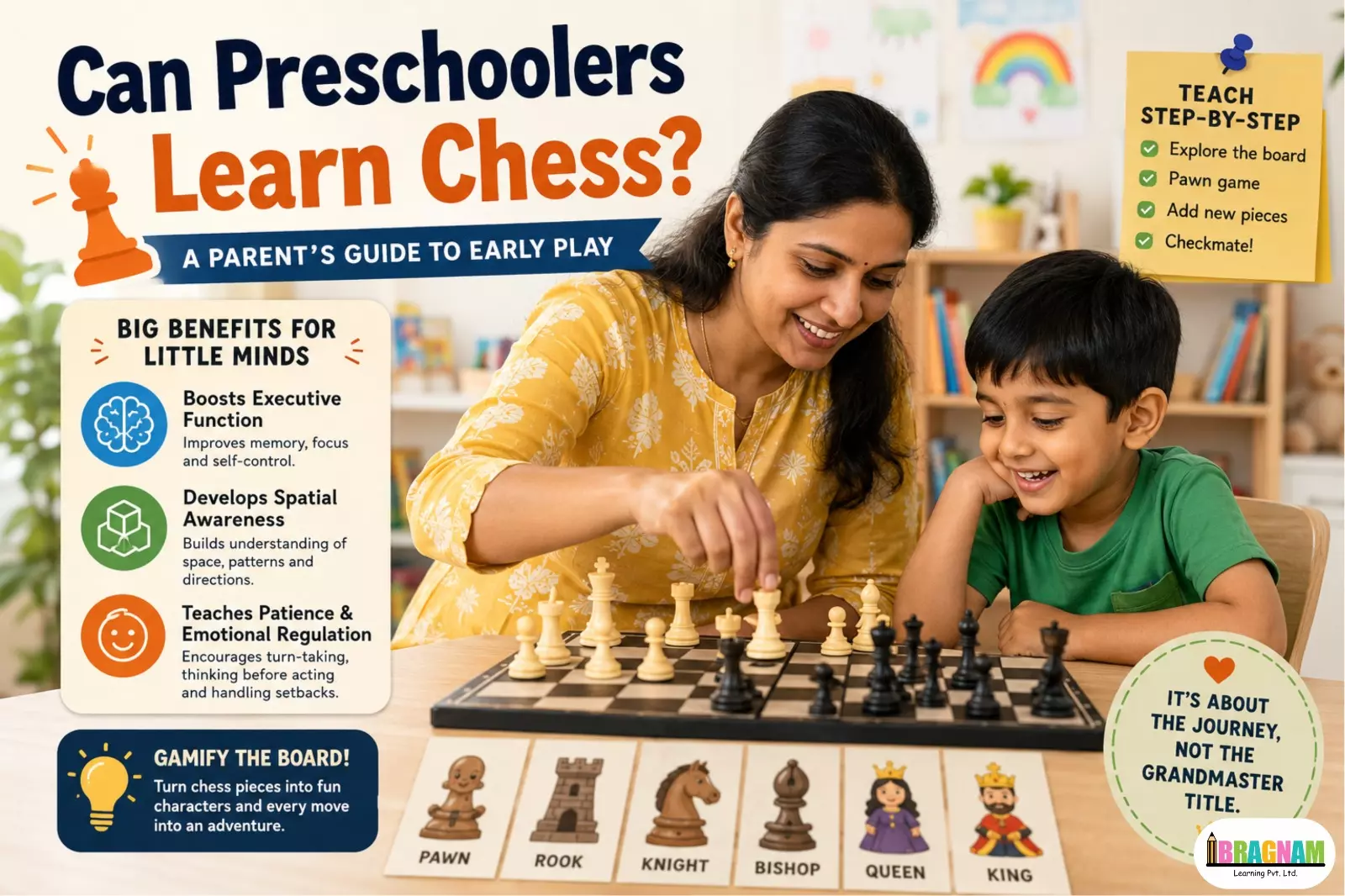
When you picture a chess player, you probably imagine two grandmasters sitting in intense, stony silence, staring at a board for hours. You likely don’t picture a four-year-old covered in peanut butter, trying to stick a plastic knight up their nose.
It’s natural to wonder: Can preschoolers learn chess? Or is trying to teach a 3- or 4-year-old the game of kings just a recipe for flying pieces and parental frustration?
The short answer is a resounding yes. While they won’t be calculating twenty moves ahead, preschoolers absolutely can learn the fundamentals of chess. In fact, introducing them to the game early can give their rapidly developing brains an incredible boost.
Here is everything you need to know about introducing your little one to the chessboard, without losing your mind in the process.
Why Chess for Preschoolers? The Surprising Benefits
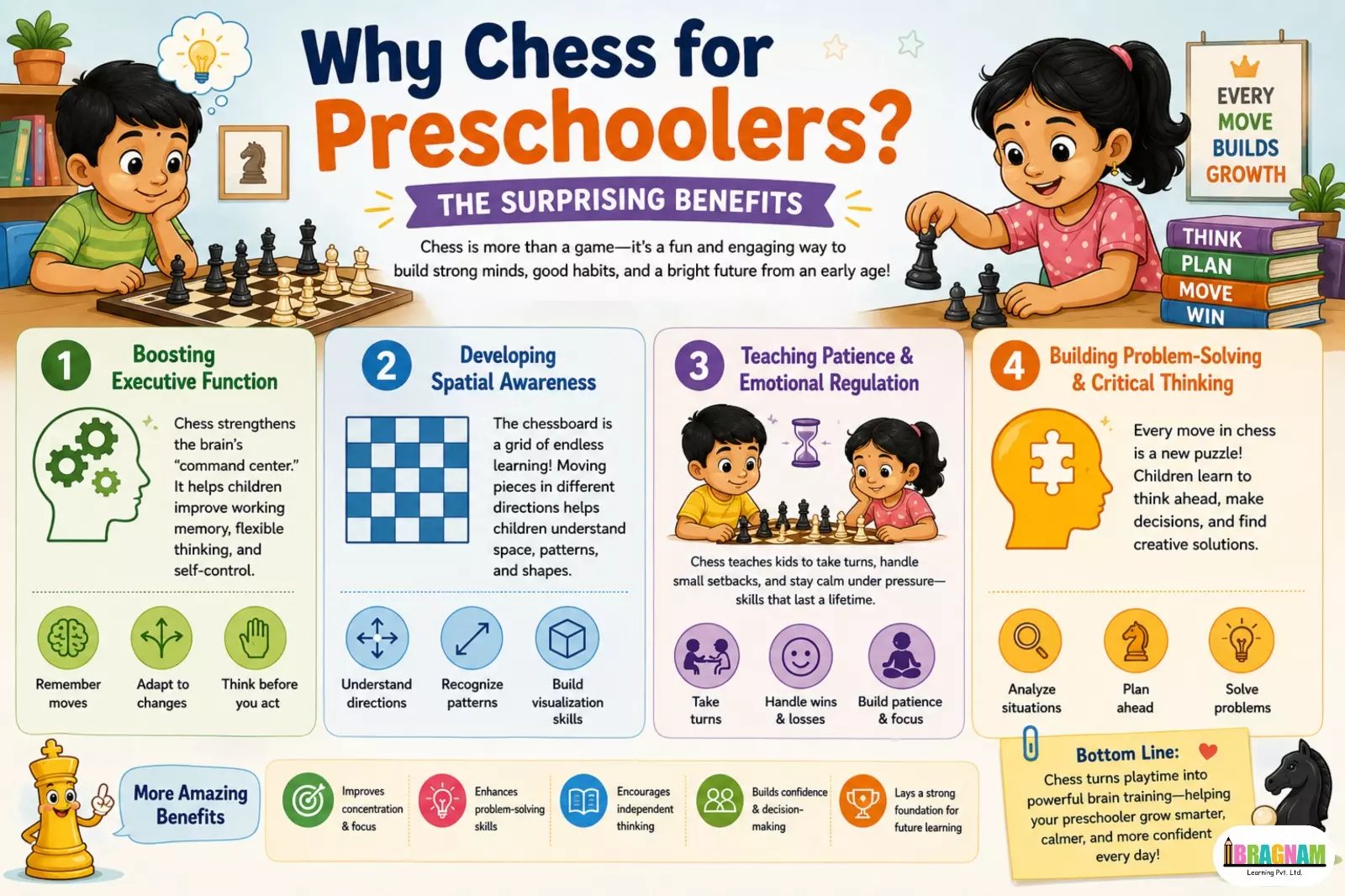
At its core, chess is a game of problem-solving. When young children play, they aren’t just moving pieces; they are engaging in complex cognitive exercises disguised as play.
1. Boosting Executive Function
Executive function is the brain’s command center. It controls working memory, flexible thinking, and self-control. When a preschooler plays chess, they have to remember how a piece moves, adapt if you block their path, and resist the urge to just grab whatever piece looks prettiest.
2. Developing Spatial Awareness
Preschoolers are still figuring out how objects relate to each other in space. Navigating a grid, understanding “diagonals,” and moving pieces forward, backward, or sideways helps solidify these geometric concepts early on.
3. Teaching Patience and Emotional Regulation
Let’s be honest: patience is not a hallmark trait of the average four-year-old. Chess forces children to take turns. It teaches them to pause, think before they act, and cope with the minor tragedy of losing a piece.
The Golden Rule: Gamify the Board
If you open a standard chess book and try to explain the “En Passant” rule to a preschooler, their eyes will glaze over instantly. To teach chess to toddlers and preschoolers, you have to throw out traditional methods and embrace storytelling.
Children at this age learn through narrative and imagination. The pieces shouldn’t just be plastic shapes; they should be characters with personalities.
Meet the Cast: Turning Pieces into Characters
- The Pawns: Think of them as the brave little toddlers. They can only take one small step forward because their legs are short, but they are very brave!
- The Rooks: These are the big, heavy castles. They can only crash through walls in straight lines—forward, backward, and sideways.
- The Knights: The bouncy horses! They are the only pieces that can jump over others, making a loud “Hippity-Hop!” sound in an “L” shape.
- The Bishops: The sneaky characters who love to slide sideways on their favorite color trails (diagonals).
- The Queen: The superhero of the board. She can do almost anything!
- The King: The grandpa of the board. He’s very old and tired, so he can only step one square at a time, and everyone else has to protect him.
Step-by-Step: How to Introduce Chess to Young Kids
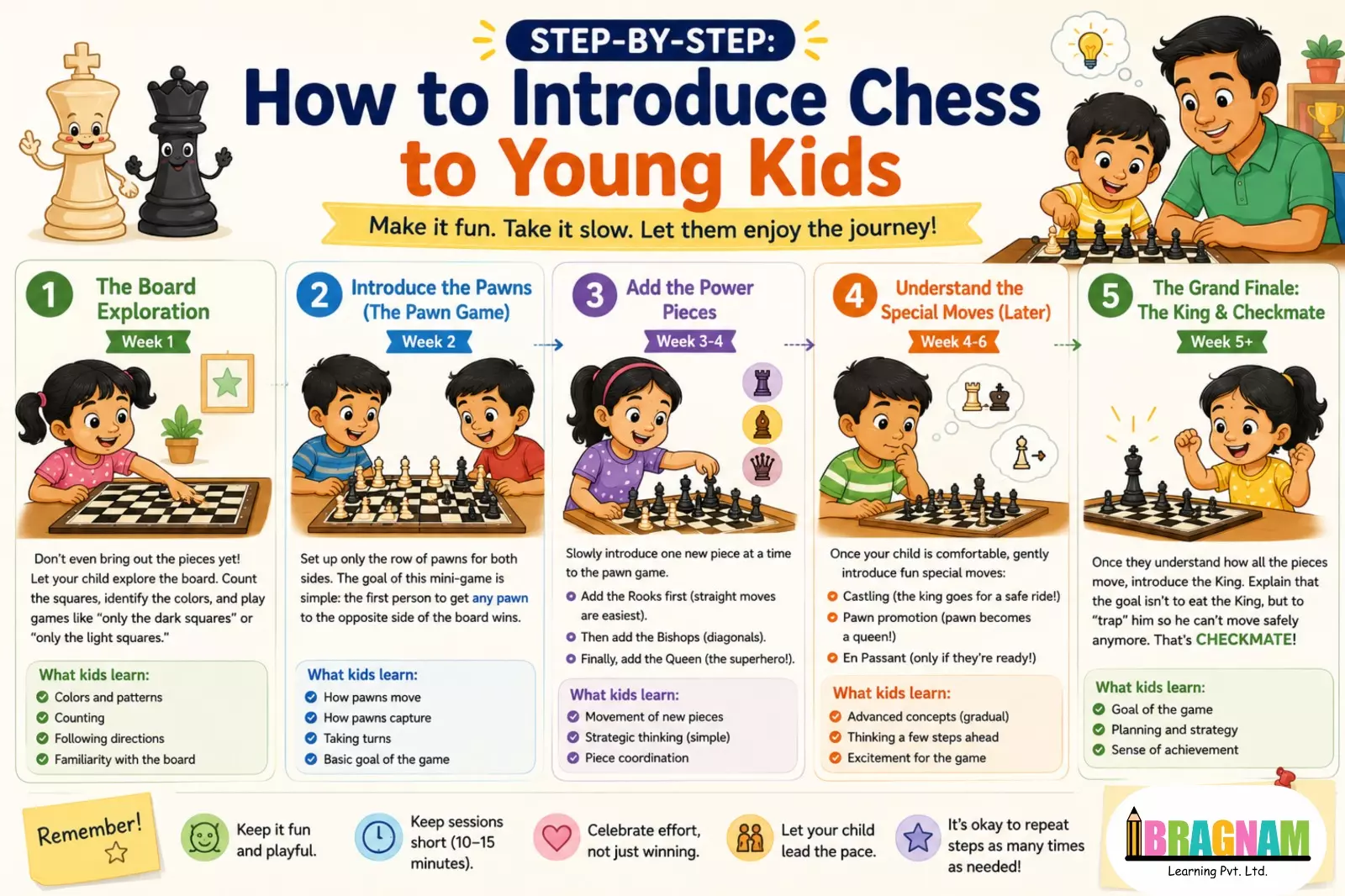
Don’t expect to play a full game on day one. Instead, break the learning process down into bite-sized, mini-games over several weeks.
1.The Board Exploration:Week 1.
Don’t even bring out the pieces yet. Let your child explore the board. Count the squares, identify the colors, and play a game where they place a small toy or candy on “only the dark squares” or “only the light squares.”
2.Introduce the Pawns (The Pawn Game):Week 2.
Set up only the row of pawns for both sides. The goal of this mini-game is simple: the first person to get any pawn to the opposite side of the board wins. This teaches them how pawns move and capture without the overwhelm of other pieces.
3.Add the Power Pieces:Week 3-4.
Slowly introduce one new piece at a time to the pawn game. Add the Rooks first (since their straight movement is easiest to grasp), followed by the Bishops, and then the Queen.
4.The Grand Finale: The King & Checkmate:Week 5+.
Once they understand how all the pieces move, introduce the King. Explain that the goal isn’t to eat the King, but to “trap” him so he can’t move safely anymore.
Signs Your Preschooler is Ready
While many kids can start around age 3 or 4, every child develops at their own pace. Your child might be ready to try chess if they display these signs:
- They can count up to at least 10 reliably.
- They can distinguish between left and right, or follow basic directional cues.
- They can sit and focus on a single activity (like Legos or coloring) for 5 to 10 minutes.
- They show an interest in board games or matching games.
If you try it and they start throwing the pieces or crying, stop. Put the board away and try again in six months. The goal is to keep chess associated with fun, not frustration.
Conclusion: It’s About the Journey, Not the Grandmaster Title
Can preschoolers learn chess? Absolutely. But the goal of teaching chess to young children isn’t to build a world-class prodigy by kindergarten. It’s about spending quality time together, stretching their cognitive muscles, and teaching them that complex problems can be solved one small step at a time. Keep it light, make it silly, and let them guide the pace.