
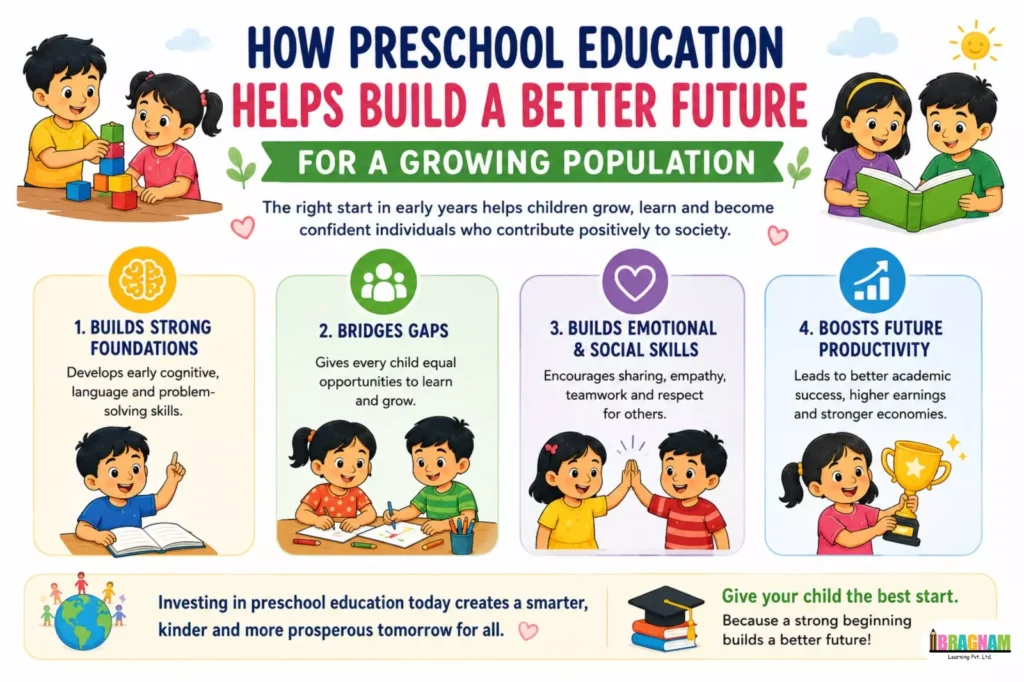
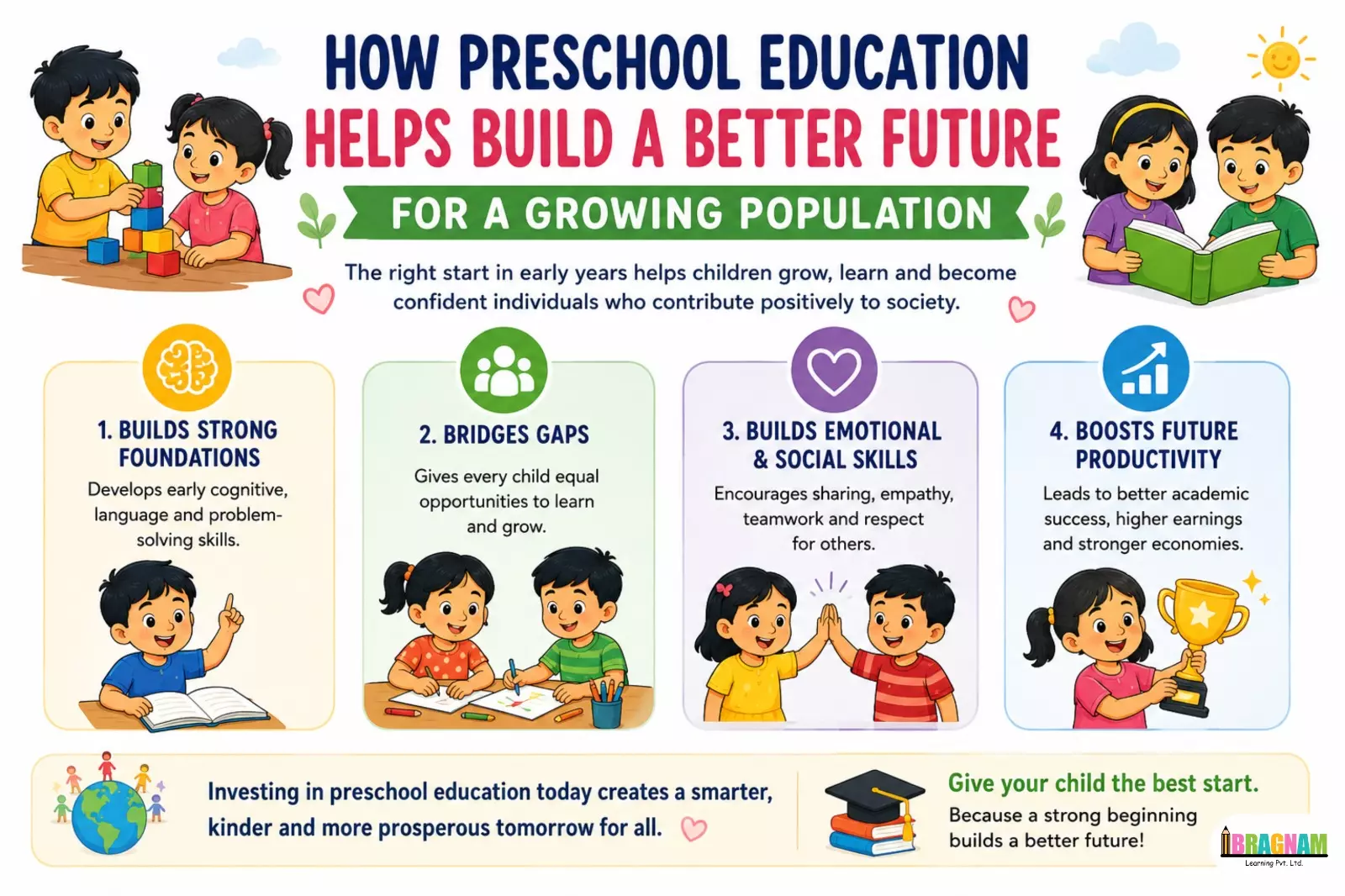
Education: The world is changing faster than ever, and with a rapidly expanding global population, the demands on our future workforce, social systems, and economies are shifting dramatically. As parents, educators, and policymakers, we often look at universities and high schools when thinking about future readiness. However, the true foundation of a thriving society is laid much earlier—specifically between the ages of two and five.
Investing in early childhood development is no longer just a choice for individual families; it is a socio-economic necessity. Let’s dive into how preschool education helps build a better future for a growing population and why early learning is the ultimate catalyst for long-term global success.
Why Early Childhood Learning Matters More Than Ever
The human brain develops at an astounding rate during the first few years of life. In fact, neurological research shows that 90% of a child’s brain development happens before the age of five. During this critical window, the brain forms millions of neural connections every second, shaping how a child will think, learn, and interact with the world for the rest of their life.
As urban areas become more crowded and communities more diverse, children need structured environments where they can make sense of the world around them. High-quality early learning centers provide exactly that—a safe space where rapid brain growth is matched with purposeful, guided experiences.
How Preschool Education Helps Build a Better Future for a Growing Population
When we look at large-scale demographic shifts, the benefits of early schooling ripple outward from the individual child to society as a whole. Here is exactly how preschool education helps build a better future for a growing population.
1. Nurturing Crucial Cognitive and Language Skills
In an increasingly automated and data-driven world, strong cognitive skills are non-negotiable. Preschools introduce children to foundational literacy and numeracy through play-based learning. Instead of memorizing facts, children learn to:
- Ask questions and solve simple problems.
- Understand spatial relationships through blocks and puzzles.
- Expand their vocabulary through storytelling and group discussions.
This early exposure prevents learning gaps before they even start, ensuring that a booming student population enters primary school ready to succeed.
2. Bridging the Socio-Economic Achievement Gap
As populations grow, socio-economic disparities often widen. Children from disadvantaged backgrounds frequently start school at a disadvantage compared to their peers. High-quality preschool acts as an equalizer. By providing all children with access to identical learning resources, nutritious meals, and professional guidance, we ensure that a child’s potential isn’t dictated by their zip code.
3. Cultivating Emotional Intelligence and Social Skills
A massive population requires individuals who know how to coexist, collaborate, and communicate effectively. In a preschool classroom, children encounter peers from various backgrounds, teaching them how to:
- Share and take turns: Essential for conflict resolution.
- Practice empathy: Understanding and respecting the feelings of others.
- Regulate emotions: Learning how to handle frustration without outbursts.
These soft skills are the bedrock of a peaceful, highly collaborative future society.
4. Boosting Long-Term Economic Productivity
Economists have long studied the return on investment (ROI) of early childhood programs. The data is clear: every dollar invested in high-quality preschool yields up to a 13% return per year through improved academic outcomes, higher future wages, and reduced public spending on remedial education and healthcare. By ensuring children are well-educated early on, we prepare a massive workforce capable of driving innovation and economic stability.
The Key Components of an Effective Preschool Curriculum
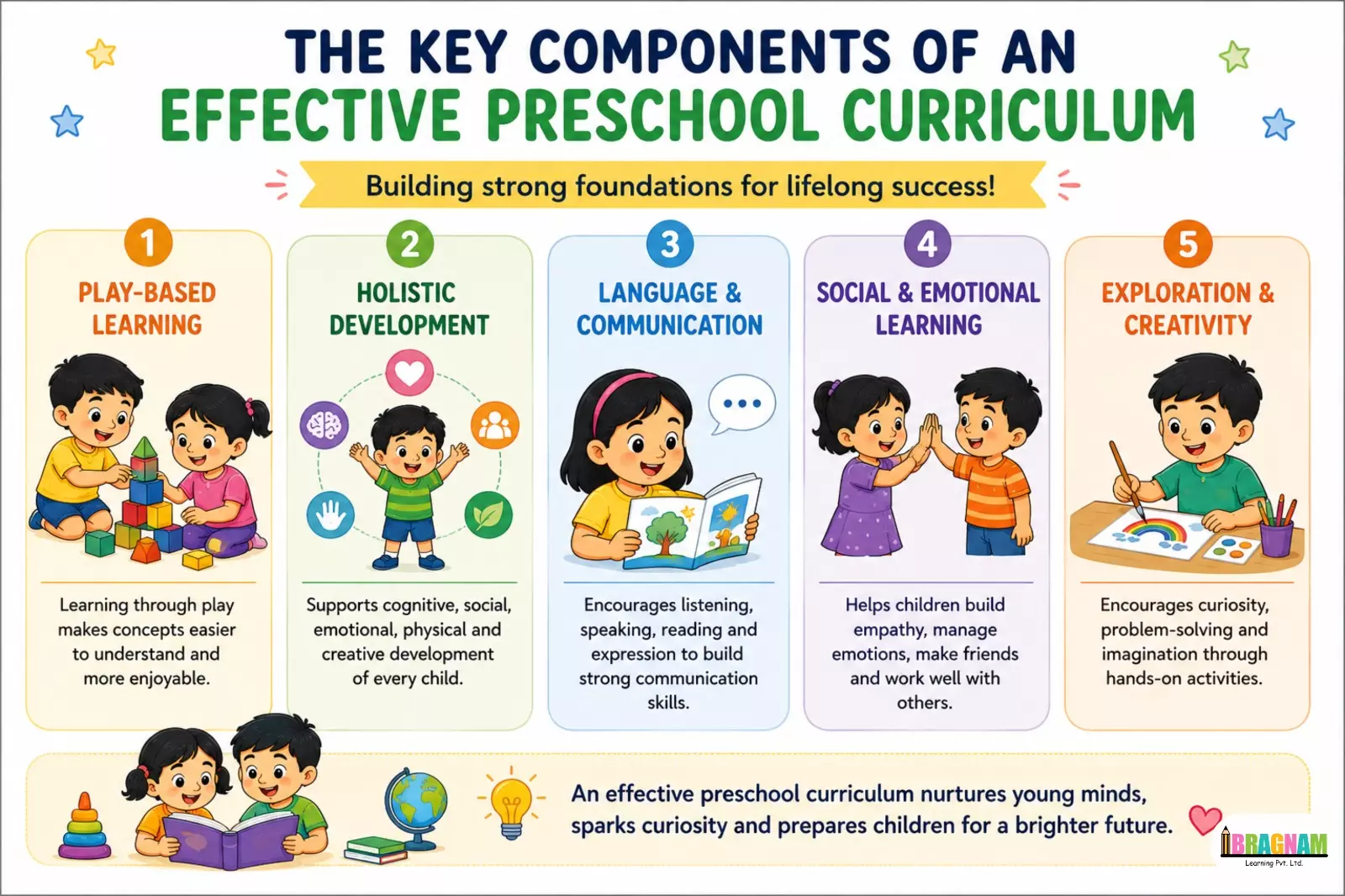
Not all early childhood experiences are created equal. To truly understand how preschool education helps build a better future for a growing population, we must look at what makes a modern curriculum effective.
Play-Based vs. Academic Learning
The best preschools don’t treat toddlers like mini-high schoolers. Instead, they utilize play-based learning, where playing is the vehicle for learning.
The Role of Trained Educators
The success of early learning depends heavily on teachers. Trained early childhood educators understand developmental milestones. They know when to step in to guide a child and when to step back to let them figure out a problem independently, fostering a lifelong love for learning.
Overcoming Global Challenges in Early Education
While the benefits are clear, widespread adoption faces significant hurdles, especially as population numbers climb.
- Lack of Funding: Many governments underinvest in early education compared to higher education.
- Accessibility Deserts: Rural or heavily congested urban areas often lack enough physical preschool spaces.
- Teacher Shortages: Low wages in the early education sector lead to high turnover rates.
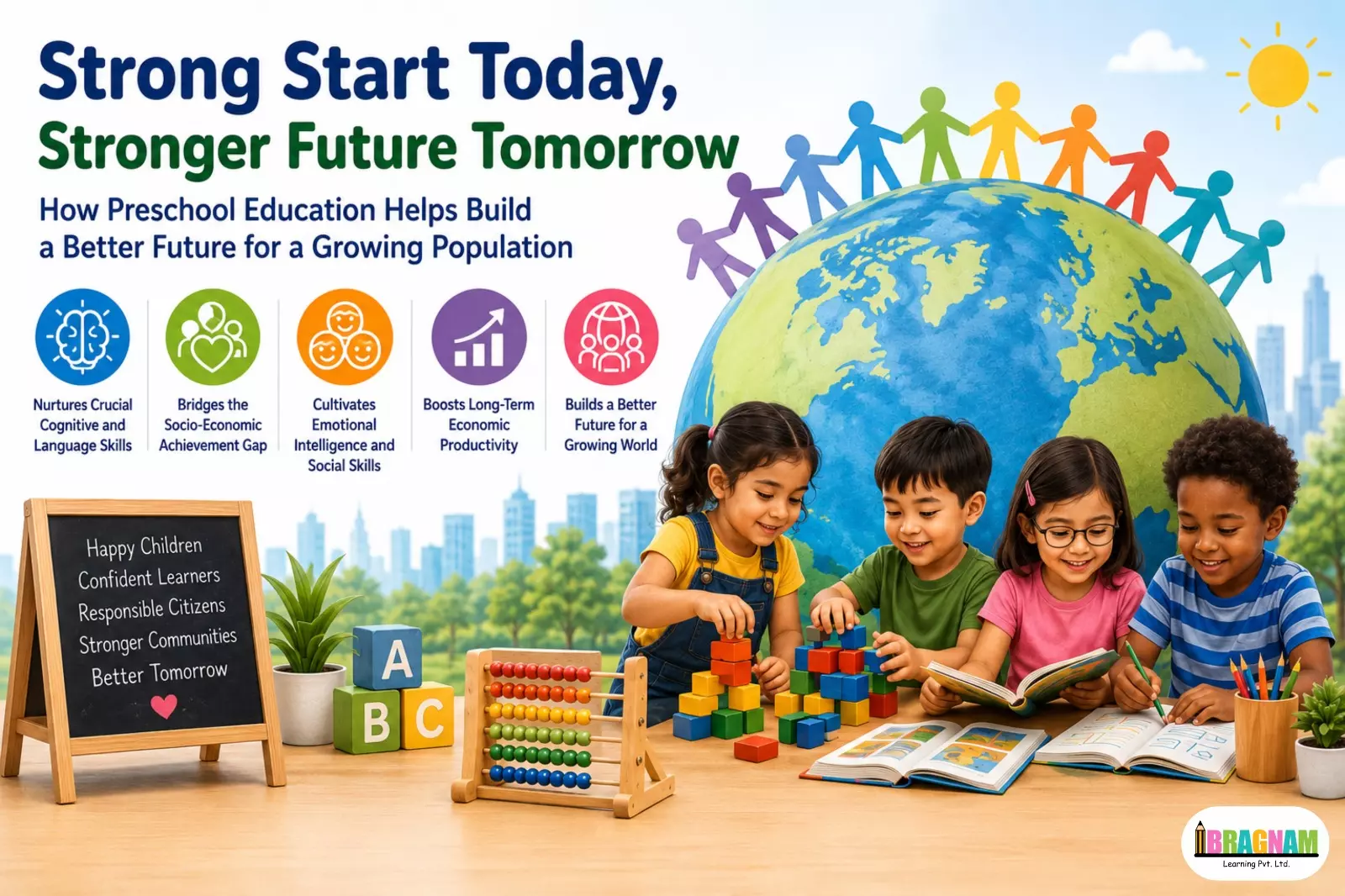
To build a brighter tomorrow, local governments, private sectors, and communities must treat early childhood infrastructure with the same urgency as building roads, hospitals, or energy grids.
Conclusion: Investing in Tomorrow, Today
We cannot build a stable, prosperous future without securing the foundation. As communities expand and the world grows more complex, early childhood centers provide the intellectual, social, and emotional framework that children need to thrive.
When we analyze how preschool education helps build a better future for a growing population, it becomes clear that it is not a luxury—it is the single smartest investment we can make for the generation tomorrow.
Ready to give your child the ultimate head start? Don’t wait until kindergarten to unlock their full potential. Contact us today to tour our state-of-the-art early learning center and secure a brighter future for your little one!