
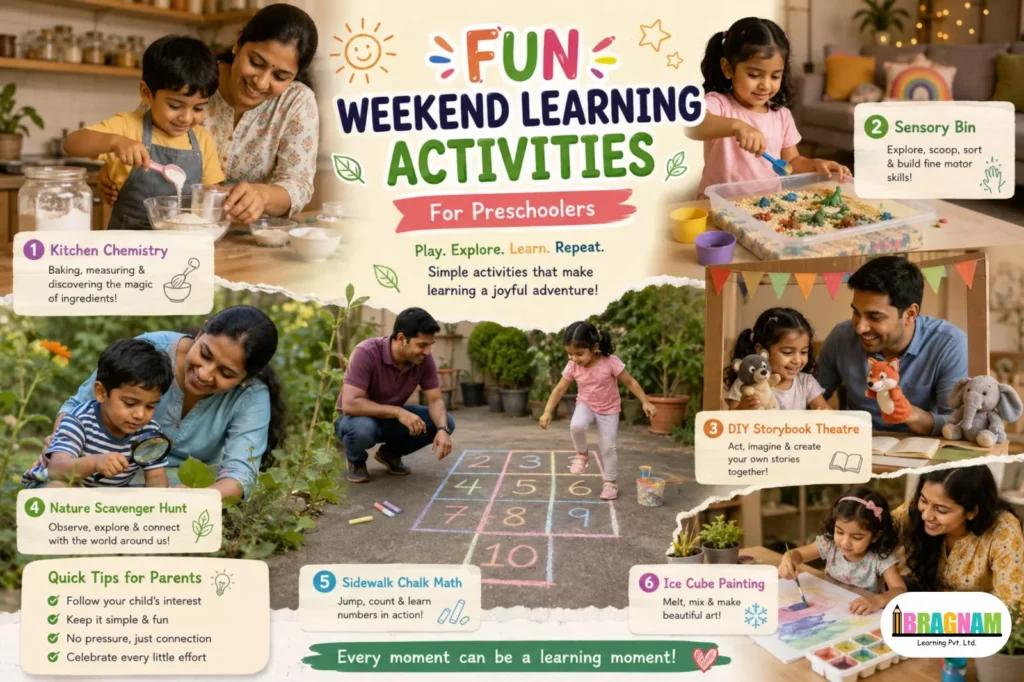
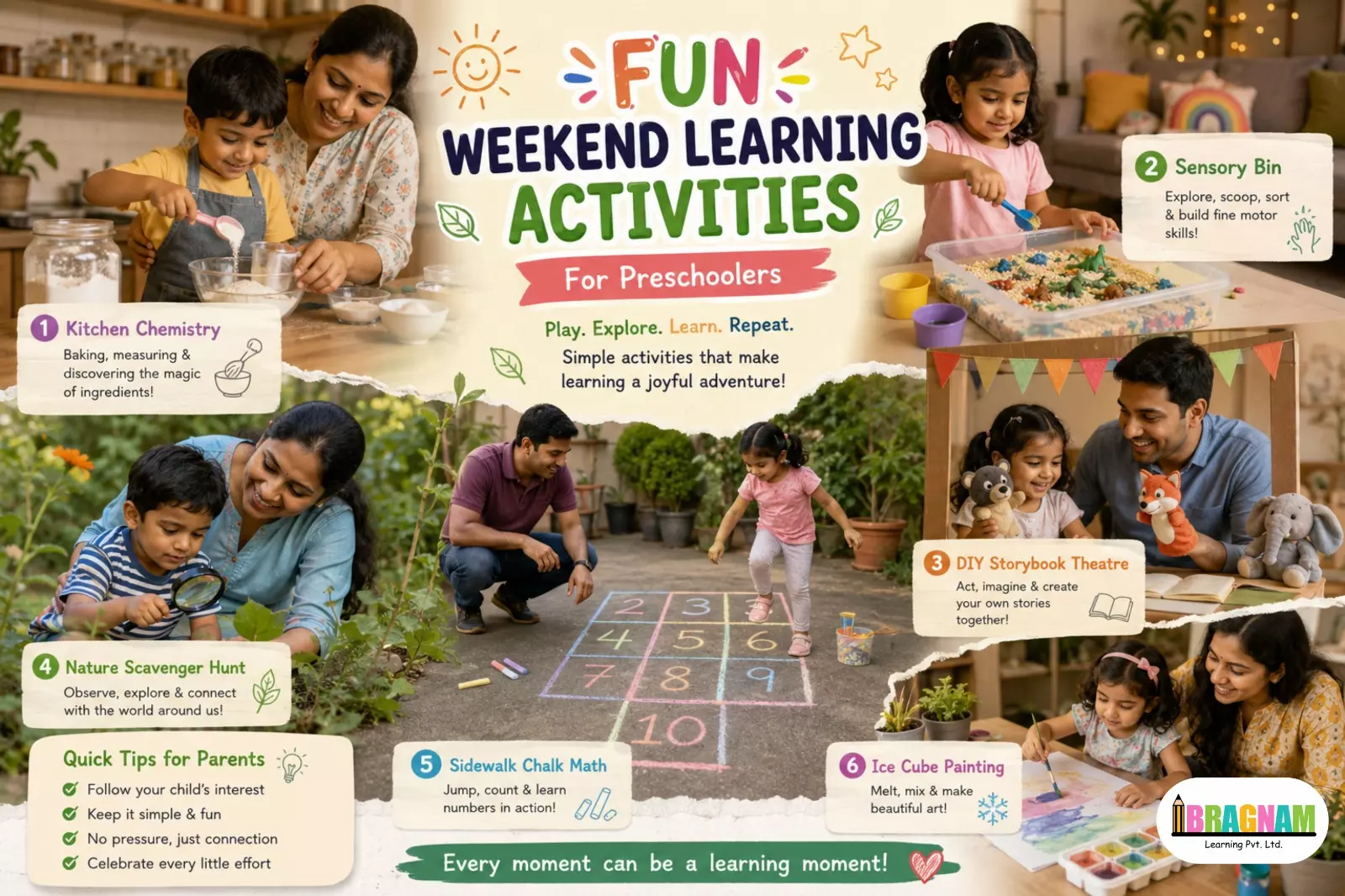
Weekends Learning: Weekends are the perfect time to unwind, but for parents of little ones, they also present a golden opportunity. Between the ages of three and five, a child’s brain is like a sponge, constantly absorbing information from the world around them. You don’t need flashcards or structured school desks to foster growth. By mixing education with play, you can turn your Saturdays and Sundays into a hub of discovery.
Engaging in fun weekend learning activities for preschoolers keeps your child entertained while subtly building crucial cognitive, motor, and social skills.
In this guide, we will explore creative, screen-free ideas that make learning feel like the ultimate weekend adventure.
Why Weekend Learning Matters for Preschoolers
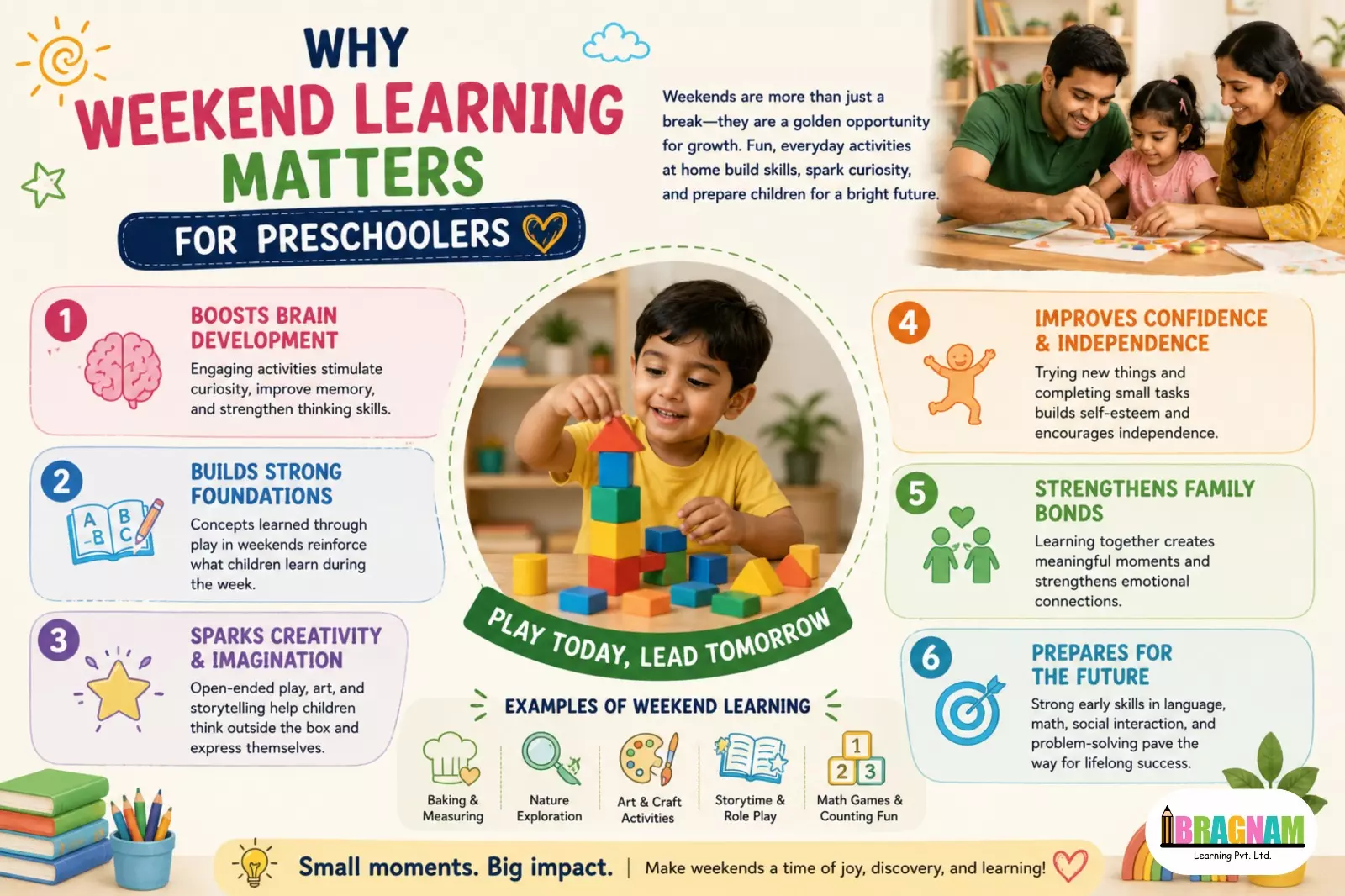
Preschoolers learn best through experiential play. When children use their hands, senses, and imagination, the concepts stick.
Stepping away from weekday routines allows for open-ended exploration. Whether it is counting rocks in the backyard or mixing colors in the kitchen, these moments build foundational skills in Science, Technology, Engineering, Art, and Math (STEAM) without the pressure of a formal classroom.
Creative Indoor Learning Activities
When rainy weather keeps you inside, these indoor projects will keep your child’s mind active and sharp.
1. Kitchen Chemistry: Baking and Measuring
The kitchen is a massive science and math lab hiding in plain sight. Baking a simple batch of cookies or mixing pancakes introduces early math concepts like volume, fractions, and counting.
- What they learn: Counting out spoonfuls, understanding full vs. empty, and observing how liquids turn into solids.
- How to do it: Give your preschooler child-safe measuring cups and let them scoop out the flour or count the chocolate chips. Talk about the changes as the food cooks!
2. The Living Room Sensory Bin
Sensory play is vital for nerve development in young brains. You can create a themed sensory bin using items you already have at home.
- What they learn: Fine motor skills, descriptive vocabulary (soft, rough, crunchy), and sorting.
- How to do it: Fill a large plastic container with dried rice, beans, or oats. Hide small plastic toys, measuring spoons, and cups inside. Ask your child to dig for treasure and sort the items by color or size.
3. DIY Storybook Theatre
Turn reading time into an interactive performance to boost your child’s language acquisition and emotional intelligence.
- What they learn: Narrative structure (beginning, middle, end), empathy, and public speaking.
- How to do it: After reading their favorite book, gather a few stuffed animals or use simple puppets to act out the story together. Encourage them to change the ending or invent new characters.
Outdoor Adventures and Active Play
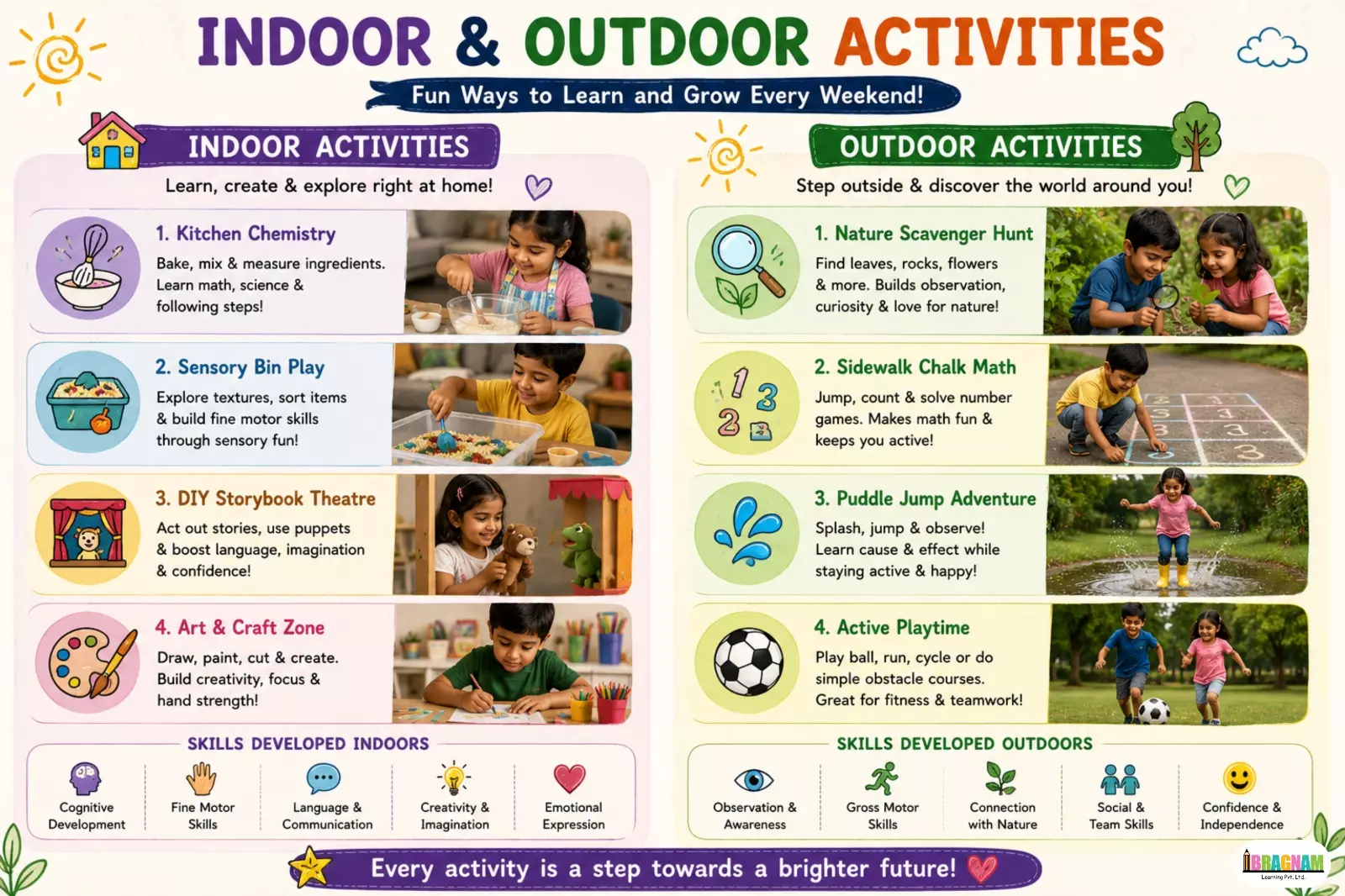
Getting outside provides a fresh canvas for exploration. These ideas combine physical movement with mental stimulation.
1. The Nature Scavenger Hunt
A simple walk around the neighborhood can transform into a biological expedition.
- What they learn: Observation, classification, and a deep appreciation for nature.
- How to do it: Draw a quick visual checklist on a piece of paper. Include items like “a smooth rock,” “a green leaf,” “something yellow,” and “a piece of bark.” Head outside and let your preschooler check off the items as they spot them.
2. Sidewalk Chalk Math Games
If you want to get your child moving while learning numbers, grab a pack of colorful sidewalk chalk.
- What they learn: Number recognition, balance, and spatial awareness.
- How to do it: Draw a giant grid of numbers (1 to 10) on the driveway. Call out a number and have your child jump onto it. To make it harder, give them simple clues: “Jump on the number that comes after 3!”
Art and Expressive Learning
Art allows preschoolers to process their emotions, experiment with cause and effect, and build hand strength.
1. Color Theory with Ice Cube Painting
This is a low-mess, high-reward art project that doubles as a cool science experiment.
- What they learn: Color mixing, states of matter (melting), and grip strength.
- How to do it: Freeze water mixed with primary food coloring (red, blue, yellow) in an ice tray with popsicle sticks. Let your child paint on heavy paper using the melting ice blocks. Watch their amazement as red and yellow melt together to create orange!
2. Found-Object Collages
Instead of buying expensive craft supplies, look to the recycling bin or the backyard for inspiration.
- What they learn: Spatial relationships, pattern making, and tactile exploration.
- How to do it: Gather cardboard scraps, bottle caps, yarn, leaves, and twigs. Give your child a bottle of child-safe glue and let them create a unique textured masterpiece on a piece of sturdy cardboard.
Quick Tips for Stress-Free Weekend Learning
To ensure these fun weekend learning activities for preschoolers stay enjoyable for both you and your child, keep these principles in mind:
- Follow their lead: If your child loses interest in the scavenger hunt but wants to stare at an anthill for 20 minutes, let them! That is still scientific observation.
- Embrace the mess: True learning is rarely tidy. Lay down old towels or sheets to lower your own stress levels during messy play.
- Keep it short: A preschooler’s attention span is typically 2 to 3 minutes per year of age. Activities should be fluid and pressure-free.
Conclusion: Making Memories That Stick
At the end of the day, the goal of introducing fun weekend learning activities for preschoolers isn’t to prep them for a college entrance exam—it is to foster a lifelong love for learning. By turning everyday weekend moments into playful experiments, you show your child that the world is a fascinating place worth exploring.
Pick one or two ideas from this list to try this coming weekend. Grab the chalk, dust off the baking sheets, and get ready to watch your little learner grow!
What is your child’s favorite way to play? Leave a comment below and share your go-to weekend activities with our community of parents! Don’t forget to sign up for our weekly newsletter to get fresh, creative parenting tips delivered straight to your inbox.